Pisa
Pisa
Beyond its iconic leaning tower, Pisa unveils a UNESCO heritage site, a powerful maritime history, and vibrant local life along the Arno. Our guide to exploring it.
Name: Pisa
Country: Italie
Status: City
Population: 200,000 inhabitants
Area: 185 km²
The city of Pisa is located in the Tuscany region, on the Arno River, in central Italie. Famous for its leaning tower, it has earned a formidable reputation worldwide. Blessed with a rich historical heritage, visitors continue to praise its treasures. A few days exploring this charming city will easily delight history enthusiasts and art lovers alike.
History
Under Roman rule, Pisa flourished as a commercial port for several centuries. Becoming an independent and powerful maritime state in the 10th century, the city became the rival of Venice and Genoa. Sometime later, Pisa took control of the Tuscan coast, Sardinia, and Corsica.
In the early 15th century, Pisa fell under the control of Florence and the Medici dynasty. Then during the Renaissance, the University of Pisa was built. It was at this university that the celebrated physicist Galileo Galilei became a professor of astronomy.
Beyond educational institutions, Pisa became an industrial center and important railway hub. During World War II, it suffered extensive destruction. Today, the city stands as one of Italie's most popular tourist destinations.
Discovering the City of Pisa
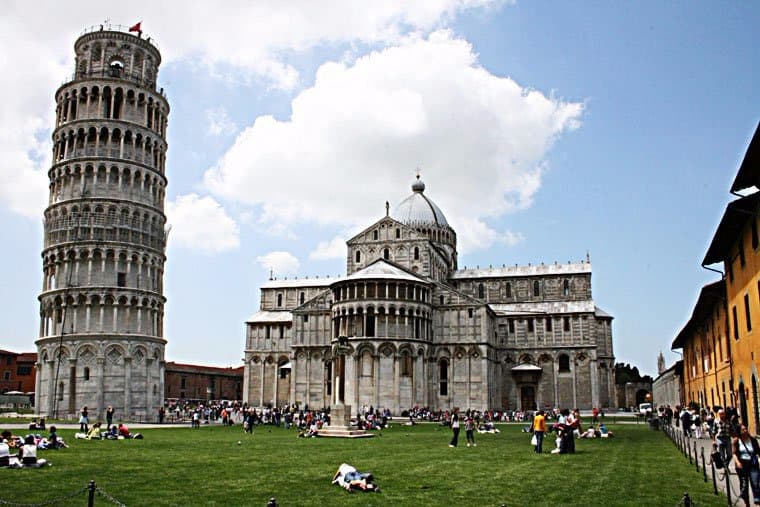
Pisa is a particularly coveted destination for travelers. The appeal of the region is evident when counting its countless UNESCO World Heritage sites. Known as a central tourist hub, Piazza dei Miracoli contains the city's most sought-after attractions. Indeed, this square houses not only the Ospedale Nuovo di Santo Spirito, but also the Campanile, the Baptistry, the Cathedral, as well as the famous Leaning Tower of Pisa.
Near this lively square, visitors will have the chance to admire the magnificent colorful palaces and aristocratic mansions that line the southern bank of the Arno River. Art enthusiasts and history lovers will be equally satisfied. They can visit the Museo dell'Opera del Duomo, the Museo delle Sinopie, and the Museo di San Matteo.
In the evening, enjoy a convivial and open-air atmosphere with local residents on Piazza delle Vettovaglie or Piazza Dante Alighieri. Here, savor the subtle flavors of local Pisa wines, such as Chianti delle Colline and Bianco di San Torpe.
Events
Every June, the city of Pisa organizes several festivals and celebrations. The most famous is the Luminara festival. It takes place on June 16 in honor of the patron saint "San Ranieri". The program includes various activities in the streets and more than 10,000 candles are lit at sunset, creating a spectacular view from the Ponte di Mezzo. As night falls, festivities conclude with a grand fireworks display.
Another notable event, the Gioco del Ponte, is a historical celebration held on the last Sunday of June. The festival begins with a colorful parade of residents dressed in 16th-century Spanish costumes and continues throughout the night with a playful battle.
Other notable events include the Regata di San Ranieri, the Capodannopisano, the Pisa Book Festival, Metarock, Nessiah, and the Premio Nazionale Letterario Pisa.
Cuisine
The gastronomy of Pisa is based on fish and mushrooms. While exploring the city, you'll easily find restaurants and food stalls throughout to taste the local cuisine. This will be the perfect opportunity to sample Pisan specialties such as Ciechialla Pisani and chickpeas.
Climate
Pisa enjoys a humid subtropical and Mediterranean climate, allowing visitors to make the most of tourist attractions year-round. Winter is characterized by mild weather with average temperatures hovering around 7°C. In summer, temperatures can reach 30°C in July and August. Nevertheless, occasional rainfall should be expected, especially in autumn. Thus, it is recommended to bring rain gear.
Air
Located in the San Giusto district, Pisa's international airport is served by numerous airlines operating several weekly flights to domestic and international destinations. Being very close to the city center, it takes just a few minutes to reach it by bus or taxi.
Train
Pisa has two railway stations: Pisa Centrale and Pisa San Rossore. Located along the Tyrrhenian railway line, Pisa Centrale is the main railway station directly connecting the city to other major Italian cities, including: Rome, Florence, Genoa, Turin, Naples, Livorno, and Grosseto.
As for Pisa San Rossore station, it is located near the Leaning Tower area and connects the city with Lucca and Viareggio. This smaller railway station is also accessible from Pisa Centrale.
Bus
Pisa has a number of bus lines that run through the city and the Tuscany region.
It is very easy to get around Pisa. A large number of regular buses traverse the city and its surroundings, including routes from the station to the Field of Miracles. Bus tickets can be purchased at tobacco kiosks as well as from automatic dispensers at the station and airport.
Want to discover this destination?
Our local advisors design your tailor-made trip.