Verona
Verona
Between Roman Arenas, Juliet's balcony and Valpolicella wines, Verona unfolds over two unforgettable days. Our complete guide to prepare your stay.
Also known as Verona, this enchanting city nestles between the Adige River and Lake Garda, in the Veneto region of north-eastern Italie. Famous for its romantic setting, charming piazzas, Renaissance-era buildings and the poignant tale of Shakespeare's "Romeo and Juliet", this city will captivate any traveller passing through Italie.
History
The origins of the city's name remain mysterious, but according to the legend of Verona, Gallic chieftain Brenno named this new settlement "Vae Roma"—meaning "cursed Rome". Over the centuries, this name evolved into Verona.
According to historians, the true origin of Verona remains largely shrouded in mystery. However, in 89 BC, the city became a Roman colony and began to flourish. Due to its urban structure and architecture, Verona was recognised as a UNESCO World Heritage Site in 2000. Today, traces of Roman craftsmanship remain visible throughout the city.
City Overview
With an area of approximately 1,426 km² and a population of 714,274 inhabitants, Verona ranks among the seven provincial capitals of the region, the second-largest municipality in the country and the third-largest in north-eastern Italie. Renowned for its artistic heritage, historic monuments, theatrical productions and opera, this city has become one of the leading tourist destinations in northern Italie.
Verona and Its Tourist Attractions
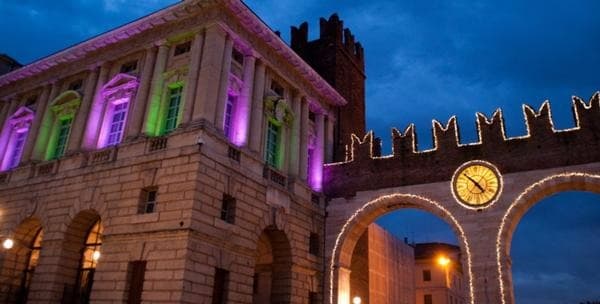
Enrichment awaits at every turn during your stay in Verona. Immerse yourself in fascinating culture, monumental architecture and historical splendour. Indeed, the city harbours remarkable heritage. Among the top attractions are: the Arena, Juliet's House, the Roman Amphitheatre, Scaligeri Castle, the fortress of Castelvecchio, the city's art museum, Lamberti Tower, Porta Borsari, Verona Cathedral, the Chapel of San Giorgetta, the Basilica of Saint Zeno and Giardino Giusti.
Verona and Its Cuisine
Horse meat is the local speciality, particularly in dishes like Pastissada de caval and Picula de Caval. Of course, pizza and pasta dishes also feature prominently on Veronese restaurant menus. Be sure to taste Pizzocheri, Casoncelli and Bigoli.
Climate
Verona enjoys a warm and humid subtropical climate. The period from June to August constitutes the dry season. Rain falls sporadically between May and October. The average temperature in the region reaches 24.2°C. Average annual precipitation is 1,295 mm.
The city of Verona is easily accessible by plane, train and bus from several major cities in Italie and Europe.
Verona-Villafranca Airport, also known as Verona "Catullo" Airport, connects the city with major destinations throughout Italie and Europe. Located just 12 km south-west of the city centre, the airport offers taxis and bus services to reach Verona's various points of interest or your hotel.
Regarding rail travel, railway lines connect Verona to Rome, Milan, Venice and numerous European cities.
For road travel, Verona is served by several taxi and bus services ensuring easy movement throughout the city.
Want to discover this destination?
Our local advisors design your tailor-made trip.