Dolomites and Lakes
Limestone cliffs soaring above 3,000 meters, trilingual Ladin villages and prealpine lakes fringed with villas: northern Italie combines two distinct worlds in a single journey.
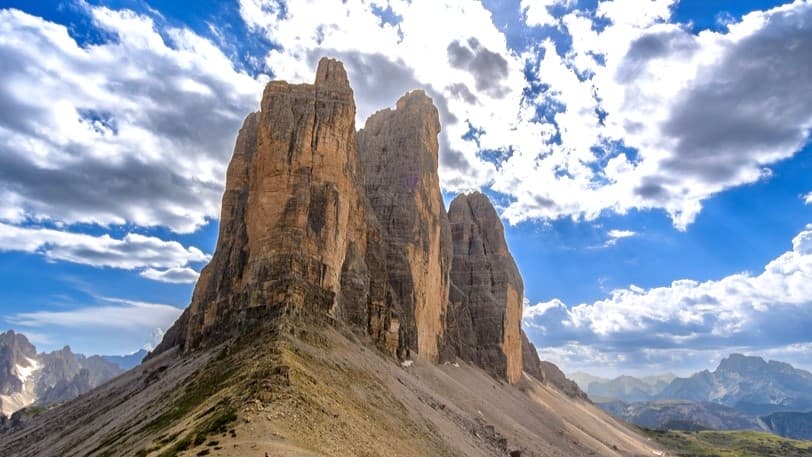
The Dolomites and the great prealpine lakes form, in northern Italie, two distinct regions that we often treat together because they complement each other in altitude and climate. In the northeast, the Dolomites stretch across Trentino-Alto Adige and Veneto. Their limestone walls, listed as a UNESCO World Heritage Site since 2009, exceed 3,000 meters: Marmolada peaks at 3,343 m, the Tre Cime di Lavaredo at 2,999 m. The rock, rich in dolomite, takes on rosy hues at sunrise and sunset, a phenomenon locals call the enrosadira.
Local culture reflects the border history of South Tyrol, annexed to Italie in 1919. In the province of Bolzano, German, Italian, and Ladin are spoken—a Romance language preserved in five valleys including Val Gardena and Val Badia. Villages alternate between houses with flower-filled balconies, onion-domed steeples, and high-altitude farms known as masi. The cuisine reflects this blend: smoked speck, canederli (bread dumplings), apple strudel, and white wines from Trentino such as Müller-Thurgau. The Bolzano market, open year-round at piazza delle Erbe, offers a clear picture of this dual identity.
On the hiking front, the network of marked trails is dense and well-maintained by the Club Alpino Italiano. Around Cortina d'Ampezzo, a historic resort in Veneto that will host the 2026 Winter Olympics with Milan, classic routes depart: the Tre Cime circuit in 3 to 4 hours, the Lagazuoi crossing with cable car descent, the Cinque Torri and their World War I trench remains. Lake Braies, at 1,496 m altitude, draws heavy crowds between 9am and 5pm in summer; we recommend arriving before 8am. For more committed hikers, the Alte Vie—multi-day trails from refuge to refuge—traverse the massifs from north to south.
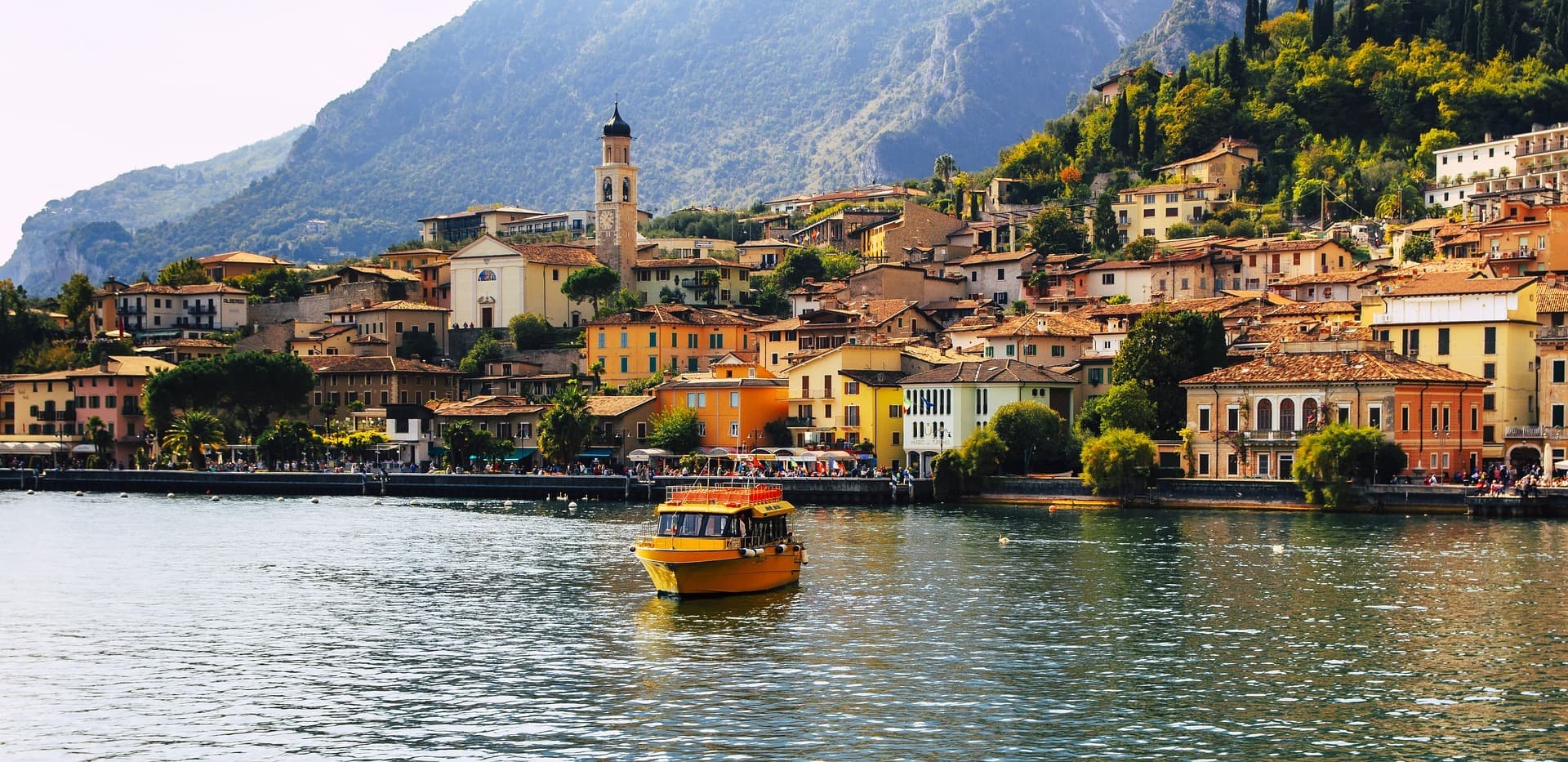
Further west, the lakes create a different world. Lake Como, Y-shaped between the provinces of Como and Lecco, extends 46 km into the Lombard Prealps. Bellagio occupies the central point, Varenna and Menaggio face each other across the water, connected by frequent ferry service. Eighteenth and nineteenth-century villas, such as Villa Carlotta in Tremezzo or Villa del Balbianello in Lenno, preserve botanical gardens and art collections. Lake Garda, larger and warmer, stretches from the Mediterranean south where olives and lemon trees grow in Limone sul Garda, to the Trentino north framed by cliffs where windsurfing is practiced in Riva del Garda. Lake Maggiore, shared with Switzerland, is worth visiting mainly for the Borromean Islands off Stresa: Isola Bella with its baroque palace, Isola Madre with its botanical garden.
Economically, the region thrives on summer and winter tourism, as well as specific agricultural output: apples from Val di Non (40% of Italie's production), Valpolicella wines below the Dolomites, olive oil from Lake Garda, and cheeses like Asiago or Stelvio. This diversity of activities explains why villages remain inhabited year-round, unlike some Alpine valleys in France or Switzerland. Our team in Rome works with mountain guides based in Bolzano, Ortisei, and Cortina, and with private boatmen on Como and Garda for transfers between shores.
Must-see experiences
Tre Cime di Lavaredo circuit. A 10 km loop, approximately 3 to 4 hours on foot at the base of three iconic limestone peaks, passing the Locatelli refuge with views over the north-facing slopes.
Lake Braies at dawn. An emerald lake at 1,496 m, framed by Seekofel. Arrive before 8am to rent a wooden boat from the historic pontile before crowds gather.
Ferry crossing Bellagio-Varenna-Menaggio. The central triangle of Lake Como can be explored in 15 to 30 minutes between villages, with stops to visit Villa Melzi, Vezio castle, or Varenna's cobbled lanes.
Ladin villages of Val Badia. In San Cassiano and La Val, mountain farms still serve turtres (spinach-filled fried ravioli) and elders speak a Romance language 2,000 years old.
Borromean Islands off Stresa. Twenty minutes by boat from Stresa to reach Isola Bella and its baroque palace with ten terraced gardens, populated by white peacocks.
When to visit
For the Dolomites, the hiking window runs from mid-June to mid-October. Before mid-June, high-altitude trails above 2,200 m often remain snow-covered and not all refuges have opened. July and August offer the most stable conditions but also the heaviest crowds at sites like Braies or the Tre Cime, with occasional parking quotas. September, in our view, is the best month: daytime temperatures of 15 to 22°C, 5 to 10°C at night at altitude, refuges still open through late September, and clear light. The ski season runs from early December to early April around Alta Badia, Val Gardena, and Cortina, integrated into the Dolomiti Superski domain (1,200 km of slopes).
The lakes enjoy a milder climate. Lake Garda, sheltered by the Prealps, has mild winters (5 to 10°C in January) and hot summers (28 to 32°C in July-August). April-May and September-October suit garden strolls and ferry rides without crowds better. Lake Como receives more frequent spring rain: pack a waterproof jacket in May. Avoid August on Como and Garda shores if seeking tranquility: it's peak Italian vacation season and traffic on the SS340 road along Como becomes challenging.
Practical advice
We recommend a minimum of 6 nights to combine both regions: 3 nights in the Dolomites (base in Cortina, Ortisei, or Corvara depending on your profile), then 2 to 3 nights on one of the lakes. Venice Marco Polo Airport is the most logical entry point for the eastern Dolomites (2.5 hours' drive to Cortina), while Milan-Malpensa or Milan-Linate serve the lakes in under an hour. For a complete circuit, we arrange arrival in Venice and departure from Milan, with private car or rental between the two.
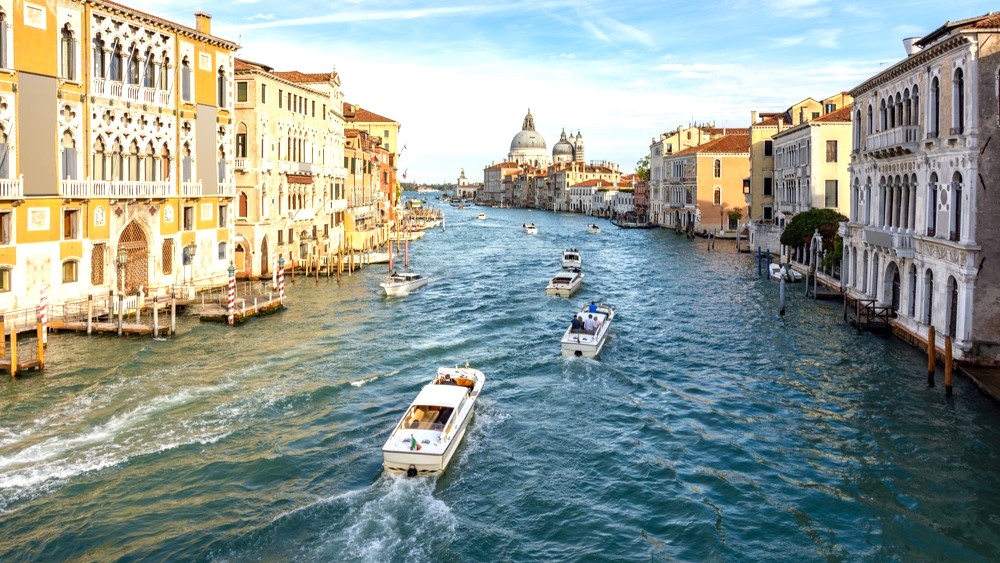
The most natural combination pairs with Venice and the Veneto, 2 hours from Cortina, allowing you to link lagoon and high mountains. A connection to Tuscany and Umbria from Milan remains feasible by high-speed train (Milan-Florence in 1 hour 45 minutes) for travelers wishing to contrast alpine landscapes with Tuscan hills. Hotel comfort is high throughout the region: 4 and 5-star hotels, renovated mountain refuges with private rooms, historic villas converted into boutique hotels on the lakes. The region suits hikers (Dolomites), contemplatives and art-garden enthusiasts (lakes), families with children from 8 years old for easy walks, and couples seeking a refined setting without extreme dislocation.