Rome and Lazio
Three thousand years of urban history spread across seven hills, extended by an Etruscan and volcanic Lazio still largely undiscovered beyond Tivoli.
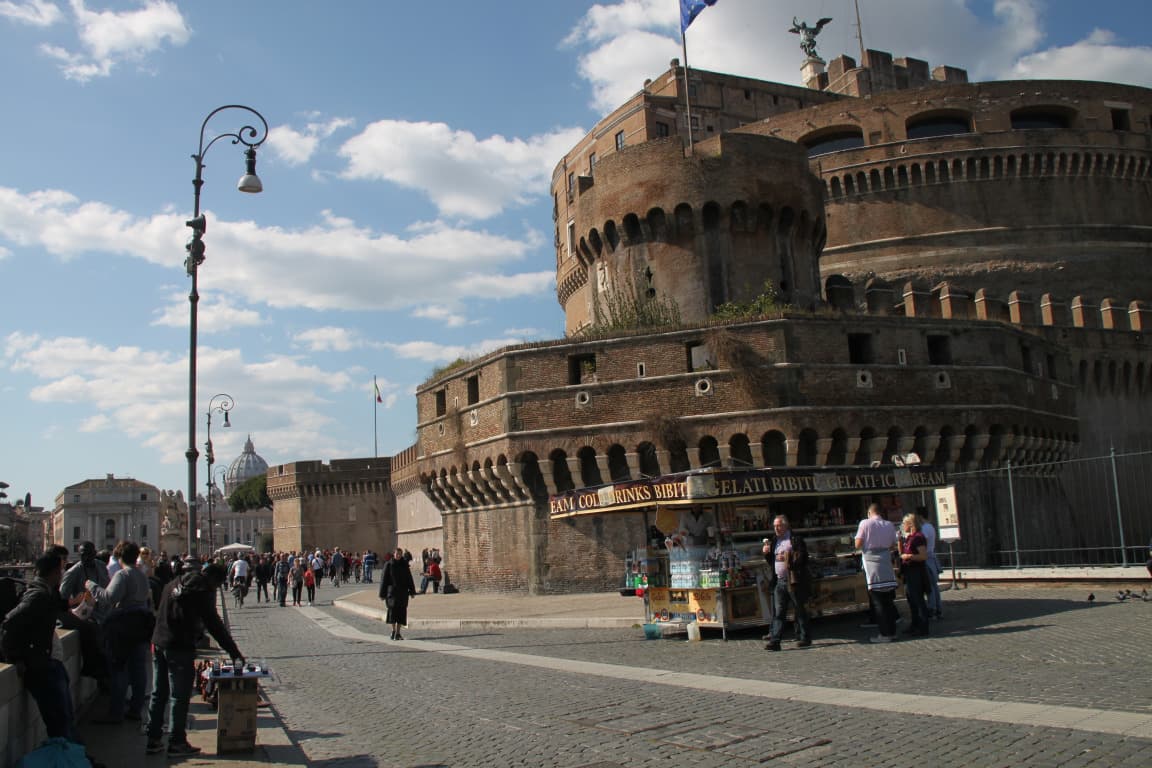
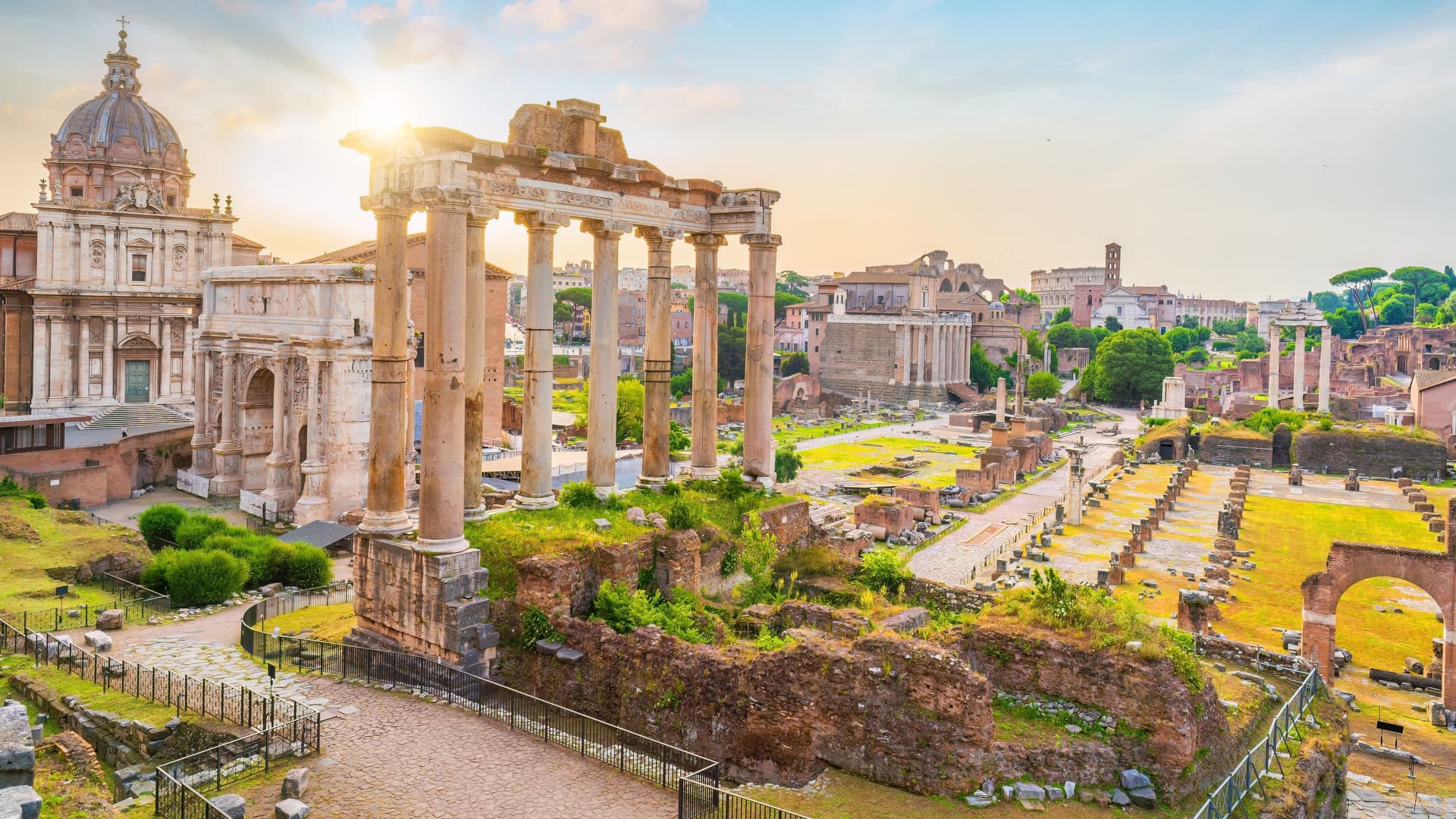
Rome concentrates nearly three thousand years of urban history across seven hills, between the Tiber and the Tyrrhenian Sea. Our team organizes stays from the capital, and we emphasize one point: the city reveals itself through successive layers. The Republican Forum, the imperial baths of Caracalla, the early Christian basilicas of the Lateran, Renaissance palaces around Piazza Farnese, Bernini's baroque on the Piazza Navona, then contemporary interventions like the MAXXI by Zaha Hadid in Flaminio. Skip an era, and you render the others incomprehensible.
The Lazio region extends over 17,000 km² around Rome, from the Apennine foothills to the east to the Tyrrhenian coast. In the north, the Roman Tuscia retains a strong Etruscan imprint: the necropolises of Cerveteri and Tarquinia, inscribed on the Unesco list, 5th-century BC funerary frescoes, tuff villages perched like Civita di Bagnoregio, accessible only by a footbridge. To the south, the Castelli Romani align wine-growing towns of Frascati, Castel Gandolfo and Albano around crater lakes. Further toward Naples, the Circeo coast and the Pontine Islands mark the transition toward the Mezzogiorno.
Roman climate is Mediterranean but marked by summer heat. July and August regularly exceed 35 °C, humidity drops only slightly at night, and some neighborhood shops close for two to three weeks in August. This is also when Romans head to Sabaudia or Sperlonga on the coast. Conversely, November and February bring short but intense rainy episodes, sometimes 60 to 80 mm in a few hours, which saturate the cobblestones of Trastevere's narrow streets.
Roman cuisine remains a strong identity marker, distinct from Tuscan or Neapolitan cooking. The four classic pastas (carbonara, cacio e pepe, amatriciana, gricia) rest on four recurring ingredients: pork guanciale, Pecorino Romano cheese, black pepper, egg. At the Testaccio market or in Garbatella's trattorias, you also find offal (coda alla vaccinara, trippa) inherited from the old slaughterhouse quarter, and Jewish-style artichokes from the ghetto, fried whole in olive oil. Lazio also produces dry white wines around Frascati and the red Cesanese from the Piglio region.
The human fabric of the capital has changed over the past twenty years. The historic center has fewer and fewer permanent residents, around 100,000 inhabitants within the walls for a metropolitan area of over 4 million. Lively neighborhoods have shifted: Pigneto for nightlife, Testaccio for dining, Ostiense for galleries, San Lorenzo for the student scene. We willingly take our travelers there on the second or third evening, once the major sites are covered, so they grasp how Rome is lived today beyond the tour buses.
Lazio remains paradoxically undervisited given its heritage density. Hadrian's Villa in Tivoli, an imperial complex spanning 120 hectares, welcomes fewer visitors in a year than the Colosseum in two weeks. The lakes of Bracciano and Bolsena, of volcanic origin, offer freshwater swimming less than an hour from the capital. This imbalance is what makes the region interesting to structure: three or four days in Rome, then two days driving through Tuscia or the Castelli Romani, and the journey takes on another dimension.
To discover
Vatican Museums and Sistine Chapel. Four hours of galleries through the papal collections to Michelangelo's frescoes. We systematically book early morning entry at 8am or after-hours visits, as midday slots are packed.
Villa d'Este and Hadrian's Villa in Tivoli. A full day 30 km from Rome, between the Renaissance fountains of the cardinal's villa and the ruins of Hadrian's private residence, where the Canopus recreates an Egyptian sanctuary.
Civita di Bagnoregio, the dying town. Medieval village perched on a tuff outcrop in slow erosion, connected to the world by a 300-meter footbridge. About twenty permanent residents in winter.
Testaccio neighborhood, popular cuisine. Former slaughterhouse quarter turned epicenter of Roman trattorias. Covered market in the morning, trattorias like Flavio al Velavevodetto in the evening, in cellars carved into a hill of amphora shards.
Etruscan necropolises of Cerveteri and Tarquinia. Painted tombs from the 6th to 4th centuries BC, banquets and hunting scenes still legible. Plan a half-day per site, 50 and 90 km north of Rome.
When to go
We favor Rome between mid-April and mid-June, then from late September to early November. In spring, temperatures range between 18 and 25 °C during the day, the gardens of Villa Borghese and Villa Doria Pamphilj are in bloom, and terraces open without oppressive heat. Autumn offers golden light and remains pleasant through All Saints' Day, averaging around 20 °C.
July and August are best avoided unless necessary: peaks of 36-38 °C make sightseeing uncomfortable between noon and 5pm, and the city empties of residents around August 15 (Ferragosto). Roman winters stay mild, 10 to 14 °C during the day from December to February, but with marked rainy episodes in November and early March. Open-air sites like Ostia Antica or the Via Appia become less pleasant, while museums (Capitoline, Palazzo Massimo, Borghese Gallery) become essential.
Practical advice
We recommend a minimum of three full days in Rome to cover ancient Rome (Colosseum, Forum, Palatine), the Vatican, the baroque center and a lively neighborhood like Trastevere or Monti. Four to five days allow you to add the Borghese Gallery, Ostia Antica and a day trip to Tivoli. Fiumicino airport connects to the center in 32 minutes via the Leonardo Express, our default entry point. To explore Lazio beyond Tivoli, a rental car becomes necessary from the second day of excursions.
Rome logically combines with Tuscany and Umbria to the north, via the high-speed rail line (1h15 to Florence) or by road via Orvieto and Assisi. Southward, links with Campania and Apulia are via direct train to Naples. The region suits all profiles: cultural travelers as a priority, but also families (the Vatican offers children's tours, Villa Borghese rents bikes) and food lovers. Hotel comfort is high, from historic palazzos to boutique hotels in Monti, and we adjust the pace to avoid the classic pitfall of overloaded schedules.