The authentic spaghetti carbonara recipe
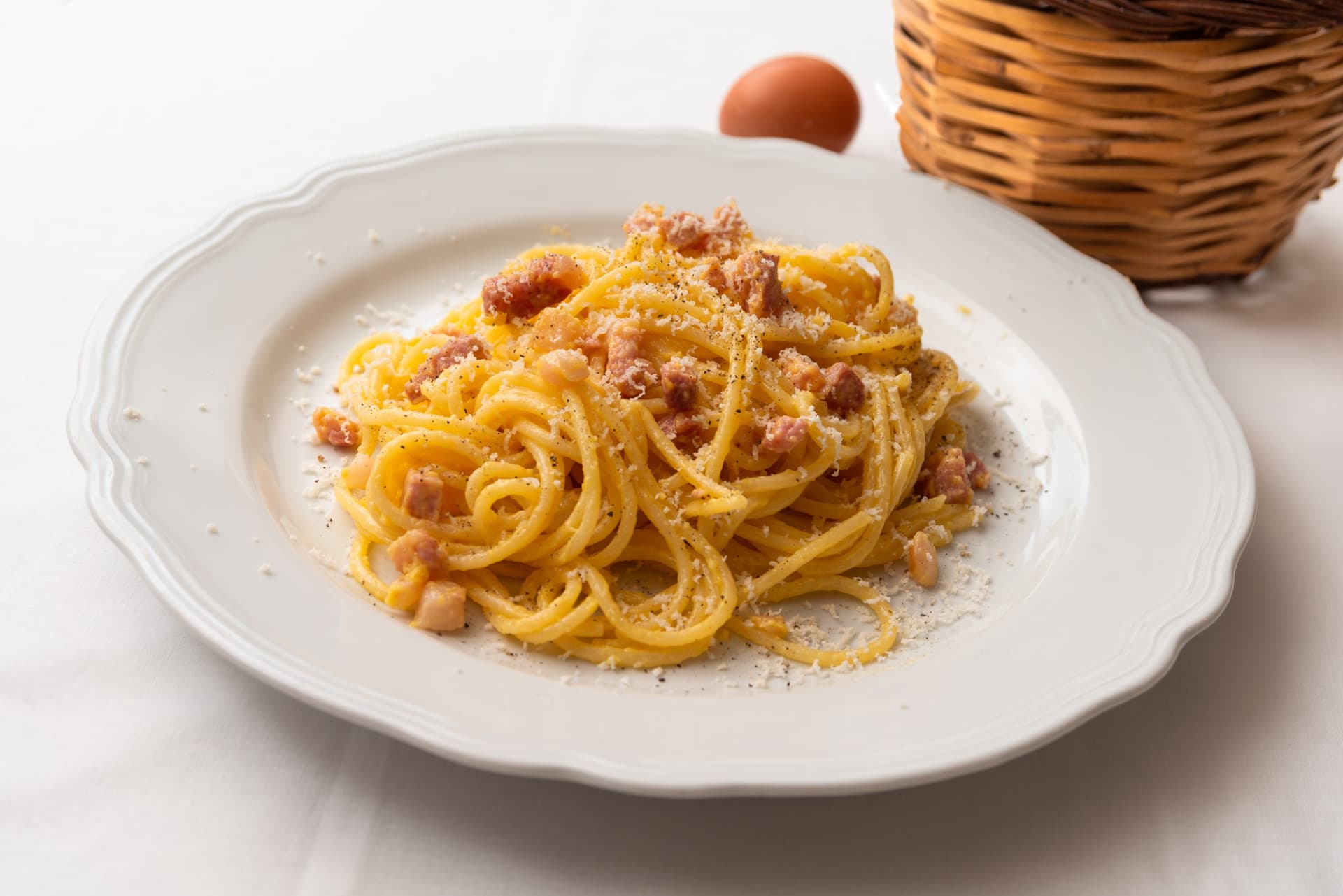
It's one of the most famous pasta recipes in the world: spaghetti alla carbonara! The real recipe contains no cream or bacon, but guanciale and pecorino.
It's one of the most famous pasta recipes in the world—spaghetti alla carbonara! Contrary to popular belief, the authentic carbonara pasta recipe contains neither cream nor bacon, but rather guanciale and pecorino! We're sharing the true spaghetti carbonara recipe and telling you its origins...
The authentic spaghetti carbonara recipe: no cream, no bacon
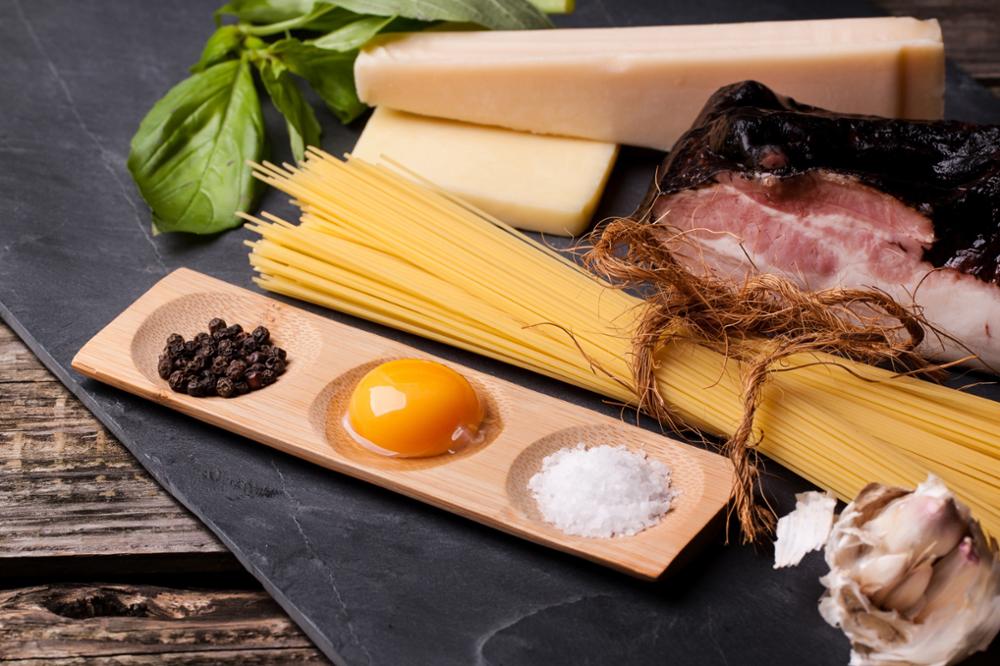
As shown by the Accademia Italiana della Cucina on its website, the Italian recipe for spaghetti alla carbonara contains neither bacon nor sour cream. Instead: dried cured pork jowl, guanciale, and the famous Italian sheep's milk cheese, pecorino!
Ingredients for 4 servings:
400 g spaghetti
150 g guanciale
80 g pecorino
3 egg yolks
1 garlic clove
Olive oil
Salt, pepper.
Preparation:
1: Cut the guanciale into strips approximately 1/2 cm thick.
2: Peel and mince the garlic. Heat a little olive oil in a pan and sauté the garlic. Add the guanciale and brown it.
3. Meanwhile, bring a large pot of salted water to a boil and cook the spaghetti al dente.
4. Grate the pecorino.
5. In a bowl, beat the egg yolks, add the grated pecorino and mix.
6. Drain the pasta and pour it into the pan with the guanciale. Add the egg yolks and pecorino and mix.
7. Season with salt and pepper to taste. Serve hot and enjoy!
What are the origins of spaghetti carbonara?
As with many iconic recipes, the origins of spaghetti carbonara are debated. While many claim Italian origins, some dispute this version by explaining that the true origin of spaghetti carbonara would be American. We're telling you both versions of the story...
The Italian origins of carbonara pasta
One of the main hypotheses attributes the origin of spaghetti alla carbonara to the charcoal burners of the Apennines (carbonari in Roman dialect). These workers employed in charcoal extraction would have used ingredients that were accessible and easily storable, thus giving birth to the first carbonara pasta dishes.
Another hypothesis would trace the origin of carbonara pasta to Neapolitan cuisine. According to this version of the story, the origin of the recipe first appeared in the 1837 treatise Cucina teorico-pratica in dialetto napoletano d'Ippolito Cavalcanti Duca di Buonvicino.
The American origin of carbonara pasta
The hypothesis evoking the American origin of spaghetti carbonara reports that the birth of the recipe would be associated with American soldiers present in Italie during World War II. Indeed, the recipe would have appeared when Renato Gualandi, a Bolognese chef, was tasked with preparing a meal for officers of the Anglo-American army at the Grand Hôtel des Bains in 1944.
He then reworked the Italian pasta recipe by adding dehydrated egg yolks, bacon, and cheese recovered from military rations, the famous "K ration" of American soldiers. According to this theory, this was the first version of carbonara pasta. Guanciale, for its part, would make its appearance in the recipe years later, in the 1990s.
Frequently asked questions
In the authentic spaghetti carbonara recipe, guanciale (cured pork jowl) is the traditional ingredient. If you can't find it, pancetta is the closest alternative in terms of flavor. Bacon or lardons can work in a pinch, but they deviate further from the original recipe, as they are more smoked and less fatty than guanciale.
The true Italian carbonara recipe does not use sour cream. The creaminess of the sauce is achieved through egg yolks mixed with grated pecorino and the melted fat from the guanciale. Cream, often added in French or international versions, is not traditional and alters the authentic taste and texture of the dish.
This is the key trick of the recipe! To prevent the eggs from cooking and forming lumps, you must remove the pan from the heat before adding the egg-pecorino mixture. Mix quickly off the heat, optionally adding a small ladleful of pasta cooking water (hot but not boiling) to thin the sauce and achieve a creamy texture.
Pecorino is a sheep's milk cheese with a more pronounced, salty, and slightly sharp taste. Parmesan (Parmigiano Reggiano) is made from cow's milk, milder and less salty. The traditional recipe uses Pecorino Romano, but some modern versions combine both cheeses for a balance between flavor and smoothness. If you use pecorino, remember to adjust the salt quantity.
The exact origin of spaghetti carbonara is debated. The most widespread version attributes the recipe to the charcoal workers of the Apennines (carbonari) who used simple, storable ingredients. Another hypothesis links the birth of the recipe to Neapolitan cuisine as early as 1837. Finally, some historians attribute modern carbonara to American soldiers of World War II, who would have inspired chef Renato Gualandi in 1944.