Abbey of San Fruttuoso
Abbey of San Fruttuoso
An 11th-century Benedictine abbey, San Fruttuoso opens onto a cove between Camogli and Portofino, accessible only by sea or hiking trail.
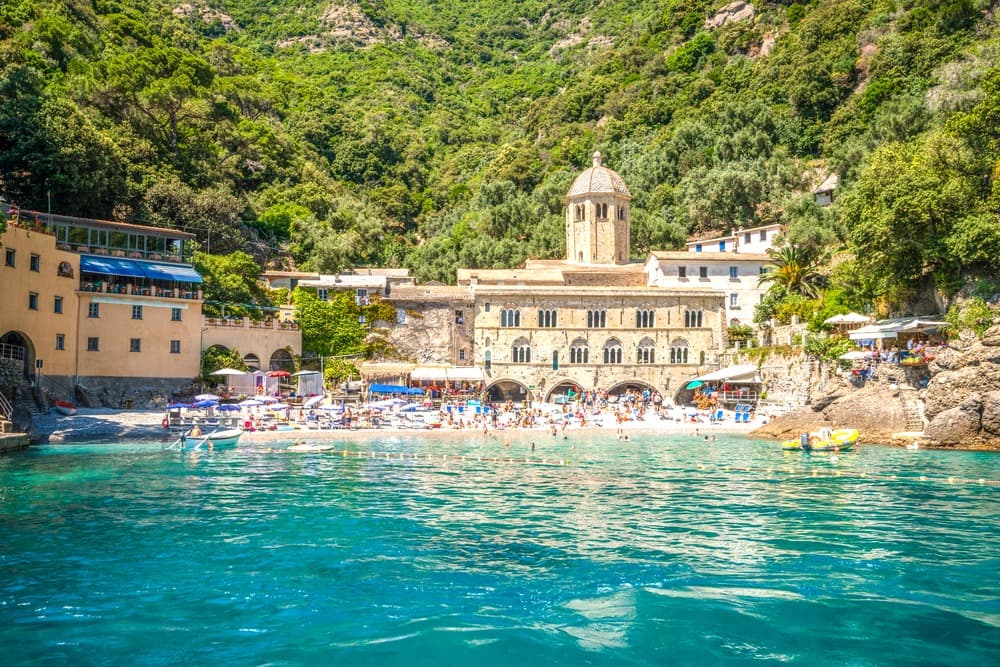
On the Ligurian coast between Camogli and Portofino, the Abbey of San Fruttuoso sits in a cove accessible only by sea or a forest trail. This 11th-century Benedictine complex, now managed by the Italian Heritage Foundation (FAI), combines a Romanesque church, a two-level cloister, a 16th-century watchtower, and—submerged in the bay—the statue of Christ of the Abyss.
Why visit the Abbey of San Fruttuoso
The site brings together three rarely combined attractions. Historically, it houses the relics of Saint Fruttuoso, Bishop of Tarragona (Roman Hispania), martyred around 259 AD under Emperor Valerian, as well as the tombs of the Doria princes, who shaped Genoa's history. Architecturally, the abbey combines a Romanesque cloister and a dome of Byzantine inspiration, an uncommon feature in Liguria. Scenically, access limited to sea or foot, through the Portofino Regional Natural Park, makes a visit inseparable from its setting.
History of the abbey
The church was built around the early 11th century by Adelaide of Burgundy, widow of Otto I, first sovereign of the Holy Roman Empire. Tradition holds that a bishop named Prosporo, fleeing Saracen raids, sheltered the relics of Saint Fruttuoso in this isolated cove. Adelaide had the abbey constructed to house these relics and the monks who guarded them.
Throughout the Middle Ages, the Benedictine monastery experienced several phases: a period of regular observance, partial abandonment when the site served as a fishermen's lodge and pirate refuge, then revival in the 13th century. At that time, the Doria princes, become lords of the place, financed major renovations, added a sea-facing wing and a watchtower. In return, they obtained a burial place within the abbey.
Since the 1980s, the property has been administered by the Italian Heritage Foundation (FAI), which has made it a cultural site open to the public.
What to see on site
The church and dome
The church preserves a dome of Byzantine inspiration articulated around seventeen arches, an architectural element rare on the Ligurian Riviera. Access is through the sacristy, raised in the 16th century. At the foot of the high altar, a silver casket contains the ashes of Fruttuoso, Augurio, and Eulogio, three Christians martyred around 300 AD under Valerian, then canonized by the Roman Church.
The two-level cloister
The cloister presents an atypical two-story configuration, with arcades and vaults characteristic of Romanesque art. The lower level houses the eight tombs of the Doria princes, in white marble and black stone, forming one of the best-preserved noble burial ensembles in the region.
The Doria Tower
Built in 1562 on a rocky promontory overlooking the bay, the square tower testifies to the military role entrusted to the Doria family to protect the coast from Barbary raids.
The museum and archaeological collection
Part of the buildings houses a small museum showcasing 10th-century Ligurian architectural elements, Romanesque pieces, and tableware ceramics from site excavations.
Christ of the Abyss
In the bay itself, at approximately 17 meters depth, rests a bronze statue, 2.5 meters tall, depicting Christ with arms raised in blessing over sailors. A work by sculptor Guido Galletti, completed in 1954 and renovated in 2003, it is one of the Mediterranean's best-known diving sites. Equipped swimmers can glimpse it from the surface in clear waters.
When to visit
Seasonality is marked. The period from April to October offers the best conditions: sea suitable for boat connections, accessible hiking trails, daily site opening. May-June and September are preferable to avoid both summer crowds and partial winter closures. In low season (November to March), maritime connections are reduced and the abbey opens only certain days.
How to get there
The abbey is accessible neither by car nor by train: only the sea route or walking allows you to reach it.
- By boat: regular shuttles from Camogli, Portofino, Santa Margherita Ligure, and Recco during the tourist season. Journey of approximately 20 to 30 minutes depending on departure port.
- On foot from Camogli or Portofino Mare: marked trail of approximately 2 hours through the Portofino Regional Natural Park, among pines, strawberry trees, and holm oaks. The final descent to the cove is steep; hiking shoes recommended.
Practical information
- Visit duration: allow 1 to 1.5 hours for the abbey and museum, longer if combining with the beach or diving.
- Admission: fee required, moderate rate, partial waiver for FAI members. Verify current conditions before visiting.
- Hours: daily opening in high season, reduced days off-season. Check the FAI official site before departure.
- On site: small beach, fish restaurants, shop with books and local products.
Nearby attractions
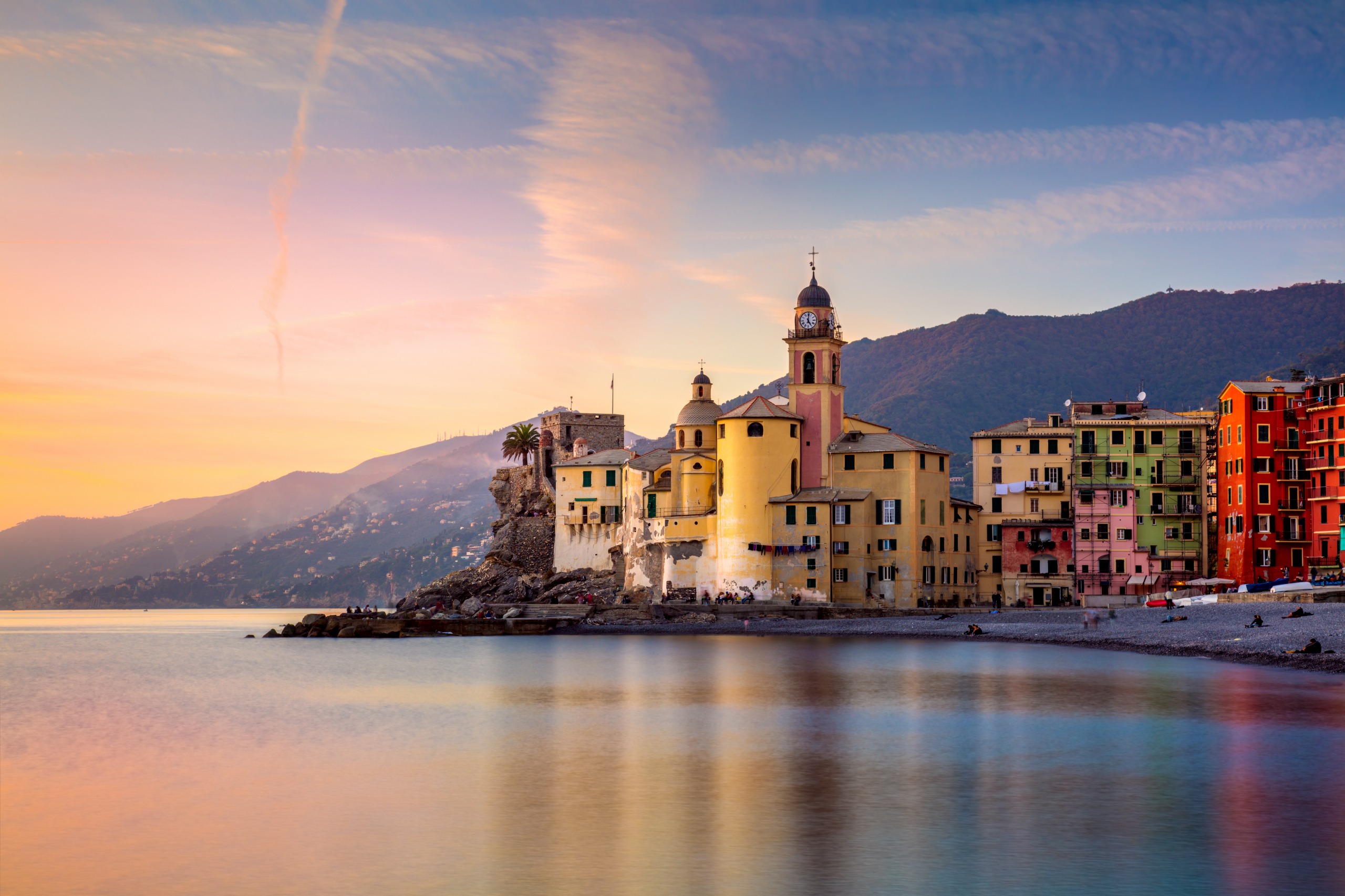
- Camogli: fishing village with colorful houses, classic starting point for San Fruttuoso.
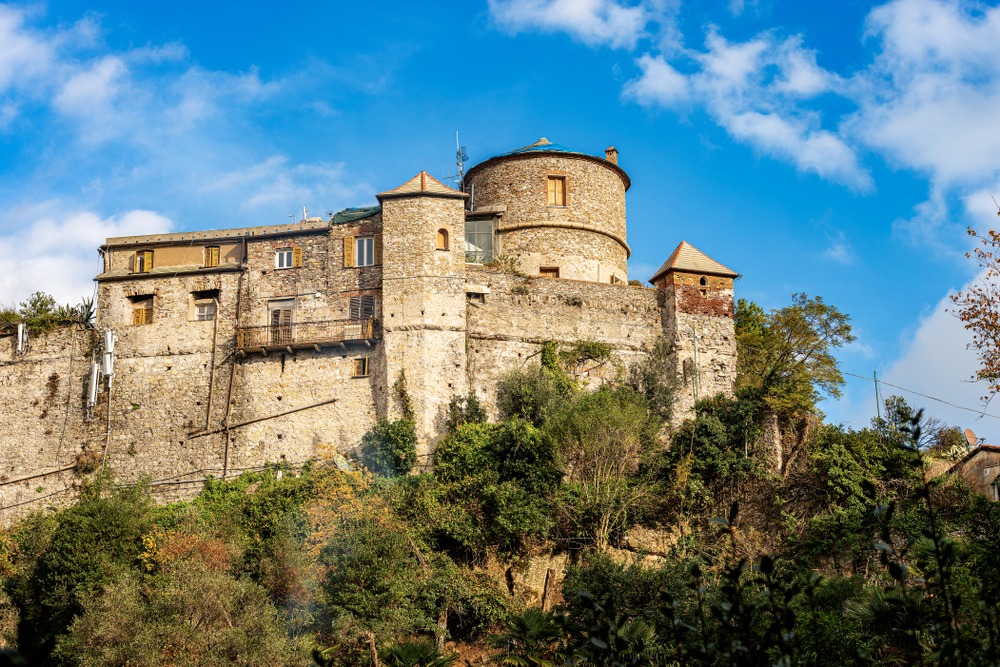
- Brown Castle: fortress perched above Portofino, to combine with the opposite side of the promontory.
- Portofino: small aristocratic port, accessible by boat or coastal trail.
- Cinque Terre: approximately one hour by train from La Spezia, natural extension for coastal village enthusiasts.
Frequently asked questions
Frequently asked questions
No. No road serves the bay. Access is only by boat from nearby ports or on foot via the Portofino Regional Park trails.
The trail takes approximately 2 hours one way, with steep sections especially on the descent to the cove. It is suitable for hikers in good condition equipped with appropriate footwear.
Yes, in calm seas and clear water, you can see the statue from the surface with fins, mask, and snorkel. For close observation, local diving centers organize supervised outings.
May-June and September offer the best compromise: pleasant weather, reliable maritime connections, moderate crowds compared to July-August.
No. Opening days are reduced off-season (November to March). The calendar is published by FAI, the site manager.
Prepare your trip
The Abbey of San Fruttuoso naturally fits into a Ligurian itinerary blending coastal villages, hiking, and heritage. To build a custom trip, explore our journeys in Italie.
Interested in this visit?
We can include it in your personalised itinerary.