Reggio Calabria
Reggio Calabria
Mediterranean beaches, Greek bronzes and wild hinterland: Reggio Calabria is the forgotten gateway to southern Italie, facing Sicile.
Situated at the far southern tip of Italie, Reggio Calabria is a coveted seaside resort. Discover the compelling reasons to visit.
Introduction
A maritime and industrial powerhouse of southern Italie, Reggio Calabria is also a charming coastal town. The ancient Greeks affectionately called it the "City of Bronzes", testament to its artistic productivity in antiquity. Local farmers know it as the "land of bergamot", a tribute to the citrus variety that has long enriched the region. Nature lovers will be in their element, wandering through plantations of olives, vines and fruit trees that Stendhal described in sublime passages. However, the quality of the beaches, generous sunshine, breathtaking views of Sicile and the Aeolian Islands are what truly make Reggio Calabria a premier coastal destination in the south of the peninsula. Book your flight to Reggio Calabria without delay and enjoy a wonderful beach vacation with your partner or family on the Mediterranean.
History
Reggio di Calabria, commonly called Reggio Calabria or simply Regio – all three spellings are accepted – was one of the first Greek settlements in southern Italie. The bronze Warriors of Riace, visible in the city's archaeological museum, prove as much. Created around 500 BC, these sculptures testify to highly refined technical mastery, suggesting that Rhegium was a prestigious cultural hub of Magna Grecia. Supporting this claim, accounts describe how institutions of art, science and philosophy flourished in Rhegium, much like the school of Pythagoras.
The prosperous and flourishing period of antiquity was followed by the violent wars of the Middle Ages. Reggio Calabria's strategic location at the center of the Mediterranean proved its misfortune: conquering dynasties recognized the need to seize the territory to expand their commercial and political empires. Which of the Arabs, Byzantines, Crown of Aragon, House of Anjou and House of Austria left the most visible traces? The emirs (10th and 11th centuries) engaged in the infamous slave trade, yet they merit credit for improving irrigation and cultivation techniques. Norman and Aragonese constructions are the finest treasures of medieval art. Sadly, the Angevin barons are infamous for extorting maximum wealth during their brief occupation (1266 to 1282). The Habsburg royal house had little opportunity to make its mark, their reign marred by deadly plague, earthquake and Turkish raids.
On December 28, 1908, a terrible earthquake nearly destroyed Reggio Calabria and the surrounding city of Messina. During reconstruction, urban architecture was reimagined according to Art Nouveau codes, which emphasize floral and botanical motifs.
Today
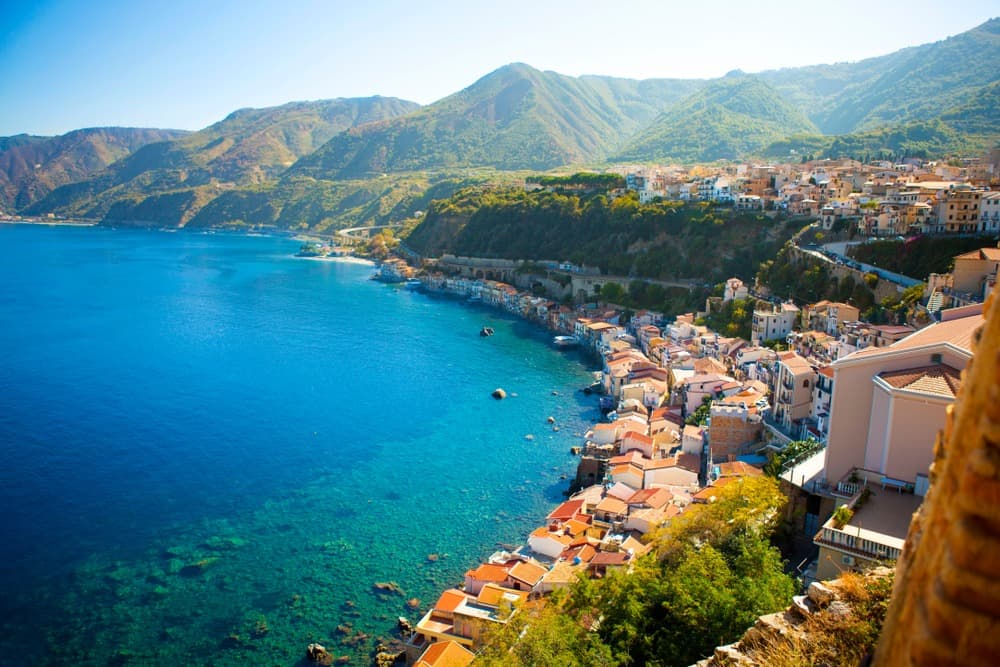
Nestled within the Strait of Messina, which separates continental Italie from island Italie, Reggio Calabria boasts an exceptional coastline. Its position as a crossroads on the Mediterranean route illustrates its dual vocation: commerce and tourism. Like other coastal destinations in Italie, tourism here evolved from fishing traditions, though Reggio Calabria has experienced some industrial lag. Following the devastating 1908 earthquake that damaged much of the infrastructure, many fishing vessels were converted to cruises and pleasure boating. Yet the true engine of economic growth is bergamot – Calabria's green gold – an ingredient highly prized by the perfume industry.
The arrival of international tourists is linked to the popularity of Magna Grecia, the ancient Greek city. Accommodation services seized this opportunity enthusiastically to develop resort tourism. Much to visitors' delight, a chain of hotels and bed-and-breakfast establishments lines the waterfront, allowing guests to enjoy the city and its surroundings. Archaeological discovery is complemented by other activities: swimming in the sea, bergamot harvesting, ecotourism in Aspromonte National Park, and exploration of vernacular heritage.
What to See and Visit
The Calabrian seaside resort, it must be said, is relatively sparse in ancient monuments if you exclude the prestigious museum. However, its dream beaches will delight swimmers and satisfy desires for sand, lounging and sunny holidays. A destination for nature and culture, carefree Reggio has adopted escape from the ordinary as its guiding principle.
National Archaeological Museum of Magna Grecia:
Housed within the Piacentini Palace complex, the Magna Grecia Museum is undoubtedly the city's number one attraction. After Berlin's museum, it is the most important exhibition center for collections of ancient Greek art. The museum's masterpiece consists of a pair of bronze sculptures: the Warriors of Riace. The two Greek statues, commonly called "the Youth" and "the Bearded Man," celebrate physical beauty, courage and bravery – themes dear to humanism. Discovered in pristine condition in 1972, they rank among the most remarkable achievements of Hellenistic art. You can view other pieces of significant archaeological value: the acrolith of Apollo, the head of the philosopher, or the Kouros.
Natural Heritage
- The Beaches: after your cultural tour of the Magna Grecia Museum, treat yourself to a leisurely break on Calabrian beaches. In summer, sunshine graces the area for more than 8 hours daily, and the setting rivals postcard-perfect scenery, with jagged coasts, granite rocks and vineyard terraces overlooking the sea.
Among the most frequented, Lido di Scilla Beach, located on the Costa Viola, gazes affectionately toward Sicile from a sheltered bay. Watch for black coral formations. Singles, beach partiers and sunbathing enthusiasts will find their paradise at Lido di Palmi, a very popular coastal resort 46 km north of Reggio Calabria. Need to escape the crowds or collect romantic panoramas? Head to Marinella Beach.
- Bergamot: your beach stroll serves as the perfect pretext to visit a bergamot farm. This precious fruit was introduced to the region in the 15th century. Part of the citrus family, bergamot resembles lemon and grapefruit, but is neither – its yellow hue is less intense than lemon, and it's smaller than grapefruit. With a local guide, you can participate in a citrus-hunting expedition, and beyond fruit picking, observe the essential oil extraction process.
- Aspromonte National Park: nature lovers vacationing in Reggio won't want to miss this wild paradise. Spanning 7,700 hectares, the park champions responsible tourism combining woodland walks, hiking to the Marmarico and Ferdinandea waterfalls, visits to Byzantine chapels and stays in mountain cabins. Children will delight in spotting animals from their biology books, such as the cautious roe deer, the powerful golden eagle or the peregrine falcon, a champion of aerial dives… Another reason to visit: from the park's mountainous location, visitors enjoy the finest views of the Strait of Messina and the Aeolian Islands.
- Cape Peloro: at the southwestern tip of Calabria, Cape Peloro, with its sublime lagoon sheltering over 400 aquatic species, is an unmissable destination for those wishing to study and closely admire biodiversity.
Cultural Heritage
The Aragonese Castle: Built in the 15th century on the initiative of Ferdinand of Aragon, this fortress is one of the rare legacies of Norman and Aragonese rule. Though the castle's northwest wing has collapsed, the two watchtowers have withstood the ravages of time. If you're traveling through this Calabrian city with children, don't miss this location. Fully renovated, the building is a recreational venue hosting games, exhibitions and various cultural events. Stop by after exploring the fine shops on Corso Garibaldi.
- The Bergamot Museum: if you've never heard of bergamot orange, take a quick tour of this museum. The connection between the famous citrus and the region is traced through a series of collections: the cultivar's origins, cultivation methods, diverse uses, machinery used before the industrial revolution… The educational value of the exhibitions is well worth the visit.
Religious Heritage
- Reggio di Calabria Cathedral: standing proudly on Piazza del Duomo, the city's mother church is nothing less than an architectural icon. The first stones were laid in 1601, after Norman leaders invaded Reggio, but the church was ransacked, destroyed and rebuilt many times over. The cathedral's current façade reinterprets 12th-century Romanesque art, as evidenced by elegant rounded windows, with subtle Gothic touches. Inside, two monuments deserve attention: the Chapel of the Holy Sacrament, whose walls are covered with precious marbles inlaid with mosaics featuring animal and floral motifs; the icon of the Madonna of Consolation, which is the object of popular devotion throughout the region. Frescoes by Nunzio Bava, a leading figure in Italian realism, enhance the church's mystical and spiritual atmosphere.
- Church of the Ottimati: initially Byzantine in style before being reimagined in Arab-Norman style, the Church of the Ottimati is an unavoidable stop during your visit to Reggio. It houses an artwork of value: the altarpiece by Agostino Ciampelio Fiorentino depicting the Annunciation.
- Church of San Giorgio al Corso: erected in memory of Saint George, the city's patron, this 16th-century parish church seduces with its neoclassical façade. To comfort the faithful, sculptors depicted Saint George slaying the Dragon with his sword on a window of the façade. As you step inside, the magnificent gray marble flooring commands attention. Near the altar, sacred iconography invites contemplation: Saint Joseph with the Christ Child alongside Saint John and the Virgin Mary; statues of Saint Anne and the Madonna and Child; the Madonna of the Rosary with saints. For pilgrims, the visit allows one to return to the teachings of Christian life.
When to Visit Reggio Calabria?
Are you hoping to visit Reggio Calabria on your next trip to Italie? Take the weather into account. Calabria enjoys a temperate Mediterranean climate: hot summers and mild winters characterize this climate. Visitors' main concern relates to rainfall. While heavy storms wreak havoc in winter (10 rainy days in January), they persist into spring and, to a lesser extent, autumn. The most favorable season for vacation, especially for beach-focused trips, is summer: the sea is warm, with average temperatures around 25°C.
The city is easily accessible via Tito Minniti Airport, which serves the Calabria region. No direct flights to the Calabrian city are available from European cities. You'll need to make a connection through Rome, Munich or Amsterdam. Budget between 4.5 to 7 hours of flying time from Paris to Reggio Calabria.
Tito Minniti Airport, also called Stretto Airport, is located just 5 kilometers from the city center. At the airport terminal, a taxi will gladly take you to your hotel for around €25. If you're on a tight budget, take public transport: ATAM bus lines connect Tito Minniti Airport to Piazza Garibaldi with several departures daily. Tickets are sold at airport kiosks.
You Would Like To…
- participate in a bergamot-hunting expedition;
- enjoy a mountain stay with local farmers;
- admire the famous Riace Warriors, on display at the National Museum of Magna Grecia;
- spend a moment of quiet reflection at the Church of the Ottimati;
- enjoy a unique vantage point of the city from the Aragonese Castle;
- take walks through olive groves and vineyards;
- taste farm products;
- swim at the beach.
Want to discover this destination?
Our local advisors design your tailor-made trip.