Lucca
Lucca
Lucca, a Tuscan city enclosed by 16th-century ramparts, reveals itself by bicycle among cathedrals, palaces and an oval piazza inherited from a Roman amphitheatre.
Lucca – or Lucca in Italian – is a Tuscan city brimming with medieval charm. The richness of its architectural heritage attracts millions of visitors. Here's what you need to know.
Introduction
Lucca, an ancient Tuscan city fortified by ramparts and towers, still remembers its heyday when it was the seat of a duchy ruled by the Bourbons. If you're the type of traveler captivated by architecture, nowhere else will enchant you quite like it. The Renaissance speaks here as clearly as an open book – explore its historic palaces, wander through its Italian gardens, where cycads, magnolias, pines and other tropical species alternate in verdant harmony. Discover Italy of the arts, where the creative brilliance of painters and sculptors has left an invaluable legacy. Blessed with countless monuments – such as the Romanesque chapel of Saint-Michel, to name just the most celebrated – Lucca is also a romantic garden city, perfect for a honeymoon. Don't delay another moment in booking your flight to Lucca, this jewel of Tuscany.
A touch of history
Lucca's Roman origins dating from 180 BC are well established. Witness: the name "Luca," by which the city was once designated in a letter sent by the scribe Cicero to Brutus, governor of Gaul. Further evidence: the orthogonal layout of the city, visible in Fillungo-Cenami Street and S. Paolino-Rome-Santa Croce Street. Finally, the ruins of the amphitheatre, whose elliptical form has been preserved to this day.
After Roman colonization, Lucca enjoyed a brighter fate, becoming one of the most glorious capitals of the Lombard kingdom. In 773 AD, the dukes of Lucca were forced to cede their territory to the Carolingian empire. The city's history is marked by political instability, contested as it was by the Visconti and the Medici in the 12th century, before becoming the battlefield between the Florentine and Milanese armies in 1429, victim to the power ambitions of feudal lords. Between 1799 and 1847, Lucca was a French possession, under Bourbon rule. The year 1805 saw the creation of the Principality of Lucca and Piombino, whose crown fell to Napoleon's sister Élisa Bonaparte and passed, upon her death, to her husband and two other members of the House of the Bourbons.
Meanwhile, the city actively developed thanks to the silk trade.
The modern city
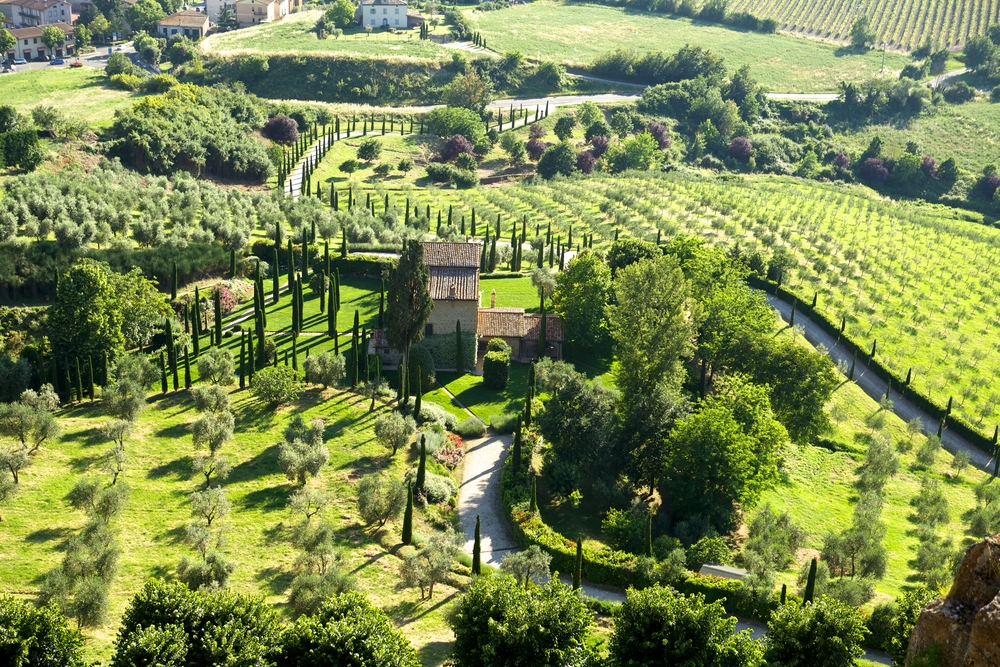
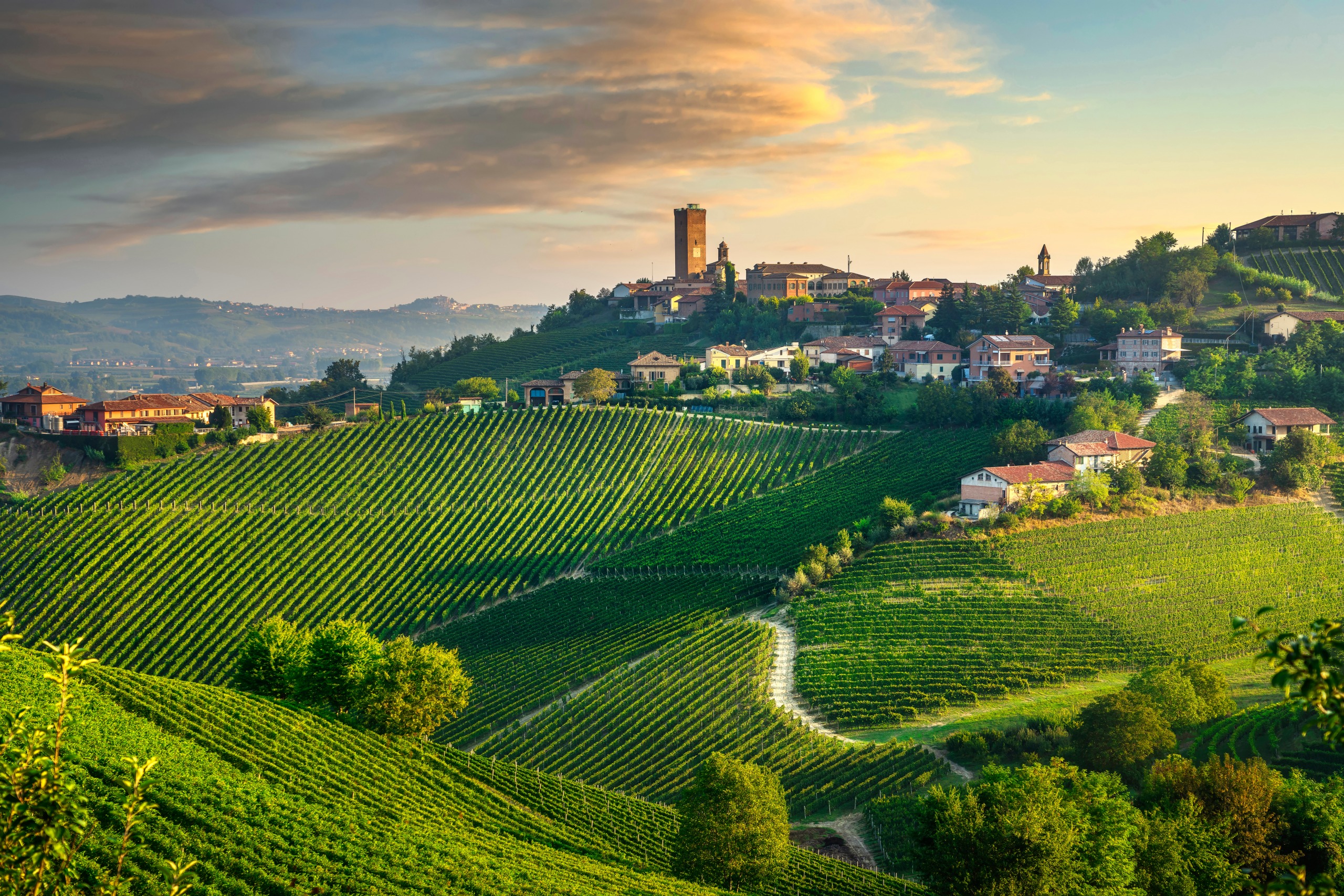
Lucca, capital of its namesake province at the far north of Tuscany, is home to nearly 89,000 inhabitants. The landscape is abundant with vegetation, dominated by cereals, vineyards and olive groves. Nevertheless, despite the area's strong agricultural tradition, economic growth is primarily driven by tourism.
Although Lucca, the pearl of Tuscany, has not acquired the reputation of Venice or Genoa, the tourism industry has a bright future ahead. The city has remained true to itself, and the rise of luxury tourism has not diminished the appeal of rural tourism, which attracts nature lovers and travelers eager to mingle with locals. Among other activities, they can visit silk farms and observe the stages of sericulture production, from silkworm breeding to weaving, passing through cocoon harvesting. Finally, note the strong cultural tourism supported by museums and exceptional noble residences.
Must-see attractions in Lucca
With its villas, palaces and charming medieval squares, Lucca reads like an open-air history book.
The ramparts of Lucca
To begin your visit, observe the formidable walls encircling the city, or Mura di Lucca. Constructed during the 16th and 17th centuries, Lucca's walls feature curtain walls, bastions, tall towers and a circular boulevard encasing the city over a total perimeter of 4 km. They represent the finest example of Renaissance fortifications, designed to withstand cannon fire. Today, this defensive walkway has become one of the city's most-frequented pedestrian paths.
The Mura di Lucca is an excellent starting point for exploring Lucca's historic center. Churches, elegant villas and grand residential complexes line every stretch of street.
Religious heritage
Whether you're drawn by architectural beauty or a desire to deepen your understanding of Christian faith, a stroll through Lucca's churches will not disappoint. Don't miss:
- The Cathedral of Saint-Martin of Lucca: this 11th-century church showcases two architectural traditions: while the façade draws inspiration from the Romanesque style, with its white marble colonnades and inlaid patterns, Gothic accents dominate the interior. Pause at the cathedral's four entrance doors: they are adorned with bas-reliefs depicting the life of Saint Martin of Tours, a life marked by mercy and charity. On either side of the cathedral, scenes from the New Testament created by Florentine and Venetian masters stir the soul and invite prayer: The Last Supper by Tintoretto, The Annunciation by Tofanelli, The Adoration of the Magi by Federico Zuccari, and more.
- San Michele in Foro: completed in the 11th century, this Romanesque place of worship stands on the ruins of a Roman forum. A statue of Saint Michael, in whose honor the church was built, is visible atop its five-tiered façade. Flanked by two cherubs with wings spread wide, the archangel strikes down the dragon with his mighty sword. The interior, adorned with a succession of vaults, arcades and Corinthian capitals, is breathtaking.
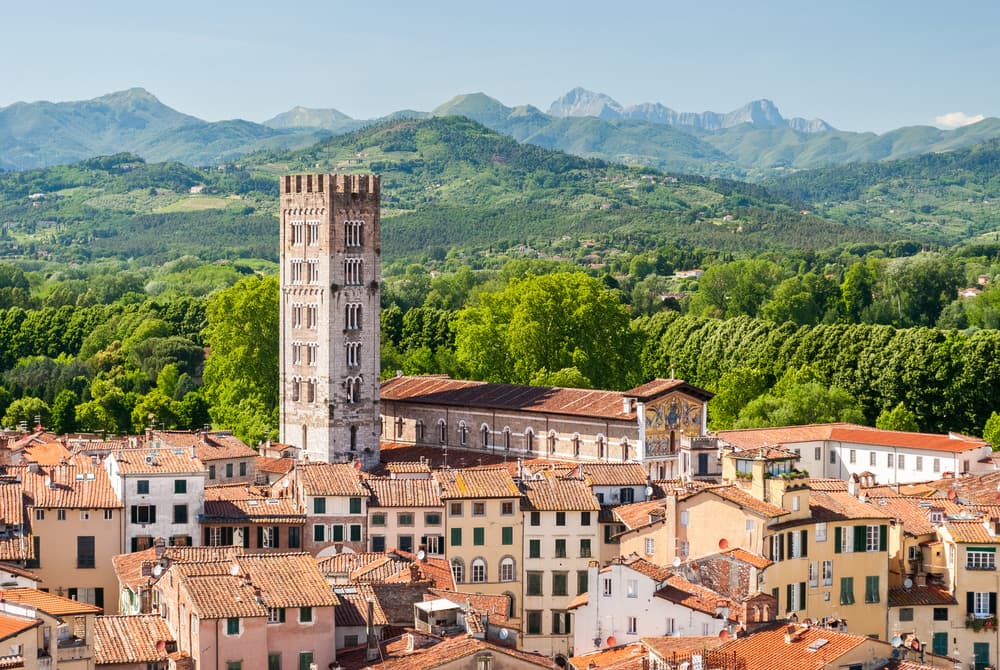
- San Frediano Basilica: inaugurated in 1147, San Frediano Basilica, one of Lucca's earliest churches, is equally worth visiting. Those passionate about mosaics and oil paintings will be delighted by this striking white marble edifice, which announces the delicacy of Romanesque art. Admire the scene of the Ascension of Christ dominating the upper portion of the façade. The Lord and Savior sits upon His throne of glory, framed by two angels and holding the book of life in His hand. Below, the twelve apostles stand beside the Virgin Mary, whose figure has been replaced by a central door. Venturing inside, the painted tableaux adorning the Chapel of the Cross, the Trenta Chapel and Saint Anne's Chapel will leave you speechless. Don't leave without pausing in the chapel of Saint Zita, where the body of the venerable servant is preserved intact to this day, without any human intervention. The reliquary is crowned by a painting of Zita distributing charity to the poor, accompanied by other works depicting the divine miracles accomplished through the saint's intercession. Upon leaving the basilica, visitors will have no doubt about the miracle of faith.
Historical heritage
While Lucca is sometimes described as a city of convents and campanile-topped churches, it is home to extraordinary villas and palaces.
Be surprised by the unique architecture of Palazzo Pfanner. It has changed function over the centuries – serving as a residence for the Moriconi and Controni families, then as a beer warehouse and sales venue between 1856 and 1929 – yet the frescoes adorning its ceilings and interior rooms give it undeniable charm. You must visit its unmissable garden, where yews, pines, lemon trees and countless other tropical specimens grow, bordered by statues of deities commanding the four elements: Vulcan, Poseidon, Mercury and Dionysus.
Continue your tour at the Palazzo Ducale, on the eastern side of Piazza Napoleone, which today houses provincial and prefectural offices after serving as the seat of the General Council of the Republic. Enjoy an unforgettable moment of artistic discovery at Palazzo Mansi, home to the city's art gallery. Masterpieces by Titian, Veronese and Tintoretto sit alongside lesser-known but equally remarkable paintings by artists of the Florentine, Italian and Tuscan schools (Portrait of a Venetian Senator, The Continence of Scipio the African, The Virgin and Saint Anne…).
Classical music enthusiasts will find much to appreciate at the Villa Puccini, a museum dedicated to the memory of Giacomo Puccini, one of the greatest names in modern opera, and managed by the composer's granddaughter.
To get some fresh air or cool off after a long walk, the Botanical Garden or Orto Botanico is a worthwhile break. Created in 1821, it was originally intended as a leisure park for the court of Marie Louise of Bourbon. You'll discover a heated greenhouse cataloging over 1,300 species along with an extensive collection of medicinal and aromatic herbs and exotic plants from four continents. A verdant haven not to be missed in the southeast of the historic center!
The flower market
A landmark event in the locality, the Feast of Saint Zita brings life to the city's streets and shops. Each April 27th, the city's patron saint receives a genuine public tribute, marked by hymns, prayers and performances. The flower market, held in Piazza Anfiteatro, is one of the festival's highlights. Under no circumstances should you miss this celebration, when the entire city blooms under masses of roses, tulips and poppies.
Best time to visit
To make the most of your stay, take the weather into account.
Must-do experiences on site…
learn the story of Zita, the patron saint of Lucca;
stroll through the flower market, which takes place during the Feast of Saint Zita;
admire masterworks of painting;
take a guided tour
Want to discover this destination?
Our local advisors design your tailor-made trip.