Segeste
Segeste
Perched on the slopes of Monte Bàrbaro, Segeste preserves one of the world's best-preserved Doric temples and an ancient theater overlooking the Mediterranean.
In western Sicily, between Palermo and Trapani, Segeste is home to an archaeological site of paramount importance. Discover the wonders of this remarkable destination!
Introduction
Dominating the Bàrbaro hill, the Greek ruins of Segeste continue to captivate visitors to Calatafimi-Segesta. This ancient Elymian city invites you on a journey to the heart of Hellenistic civilization, when Athens was the center of the world, when Sicily commanded Mediterranean maritime trade alongside Syracuse and Carthage, and when idol worship was the universal rule. Archaeological circuit, a tour of Eufemio Castle or a stroll through the orchards—a stay in Segesta offers rich possibilities. Book your entrance ticket to Segesta now, a fascinating, otherworldly destination frozen in time in Trapani province.
Historical Notes
An ancient city linked to the legend of Troy
The debate over the origins of the Greek colony of Segeste puzzles archaeologists. The inhabitants are said to have been descendants of Trojan immigrants who fled toward the Mediterranean to escape the Achaeans following the Trojan War. Landing in western Sicily, they allegedly united with their neighbors—the Sicans—forming the people of the Elyms. This is what the historian Thucydides reported in his writings. The people are said to have descended from Elymos, the illegitimate child of Anchises and Aphrodite. Yet all of this belongs to mythological accounts with no irrefutable historical proof.
Segeste and Selinunte
The Elymian city was founded more than 600 years before the common era. During the Punic Wars, the Elyms accepted surrender to the Romans, who treated them with rare kindness. This event tends to confirm the mythology, as both peoples would thus be descended from the same Trojan race.
Greek sources recount that the Segestans perpetually disputed with their Selinuntine neighbors. This conflict served Athens as a pretext for settling scores with Syracuse and Carthage. In 409 B.C., the city of Selinunte was razed and reduced to ashes, while Segeste emerged victorious thanks to military intervention by the Carthaginians.
The following century, fortune shifted, as Syracuse gained ground over Carthage on both economic and military fronts. The tyrant Agathocles forced the Segestans to rebel against their former ally and, faced with their refusal, enslaved them at the beginning of 300 B.C.
A medieval village
During the Middle Ages, the Elymian city fell completely into decline; the Normans occupied the site, but were supplanted by the royal house of Aragon and the Bourbons.
Today
Tourism has animated the old city since 2012, when it was declared an "archaeological site". It is now part of the territory of Calatafimi-Segesta, a town of 6,507 inhabitants, itself integrated into Trapani province. Thousands of tourists visit every year to admire its perfectly preserved Doric architecture, which makes it unique throughout Sicily.
What to See and Do
Perched at 338 meters altitude, the Greek city of Segeste offers much to discover, from nature walks to medieval treasures and tributes to the vestiges of a vanished civilization.
Archaeological Heritage
The Greek Theater of Segeste
Built around 300 B.C., the Greek theater of Segeste is a magical place to explore. Considering the size of this amphitheater, your imagination will soar thinking of the musical and artistic performances that once took place here. The auditorium, arranged in concentric tiers, remains in relatively good condition; here spectators once sat to watch dramas and tragedies, as Greek playwrights knew how to produce.
Unlike theaters of ancient Greece, Segeste's theater faces north to enjoy views of verdant hills and the Mediterranean Sea.
The Doric Temple of Segeste
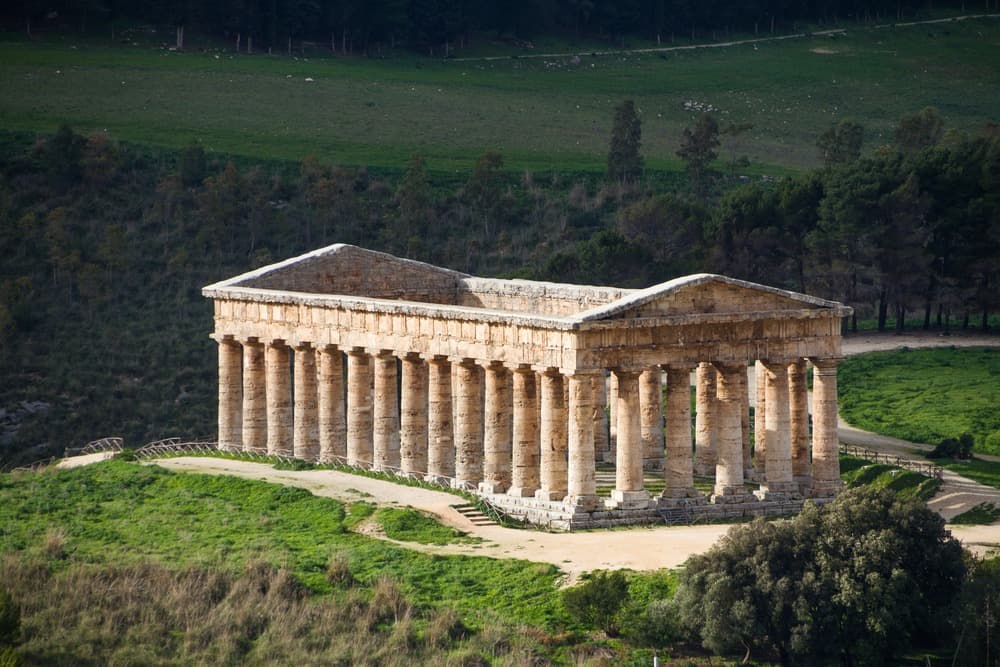
Completed between 470 and 490 B.C., this sanctuary was built extra muros, above a rocky outcrop in an idyllic setting, amid wooded hills, mountains, and fertile basins.
The Temple of Hera—or Grand Temple, as it is otherwise called—is one of the most sophisticated achievements of Hellenistic art. It is believed that the Segestans enriched themselves through commercial relations with Greek cities of the era. Many clues, however, suggest that construction was never fully completed: the unmolded pilasters, the absence of a cella in which to place the idol's statue, not to mention the missing roof—all indicate an unfinished work.
The Sanctuary of Contrada Mango
At the foot of Barbaro hill stands an ancient sanctuary, uncovered by researchers during excavations in the nineteenth century. Behind the great rectangular wall, you will be delighted to contemplate works of Doric order.
Monuments and Museums
Garibaldi House
A museum-house dedicated to the history of Garibaldi, an important political figure of Italy.
The Thermal Baths of Segeste
Thermal waters used by both Greeks and Romans to treat rheumatism.
Historical and Religious Heritage
Beyond the archaeological site of Segeste, Calatafimi boasts exceptional medieval heritage.
Eufemio Castle
Built around the mid-twelfth century and renovated in the thirteenth century, this fortified castle, which initially served as a residence for Aragonese dukes and governors before being used as a prison, offers an excellent introduction to the city's history.
The Church of Pope Saint Sylvester
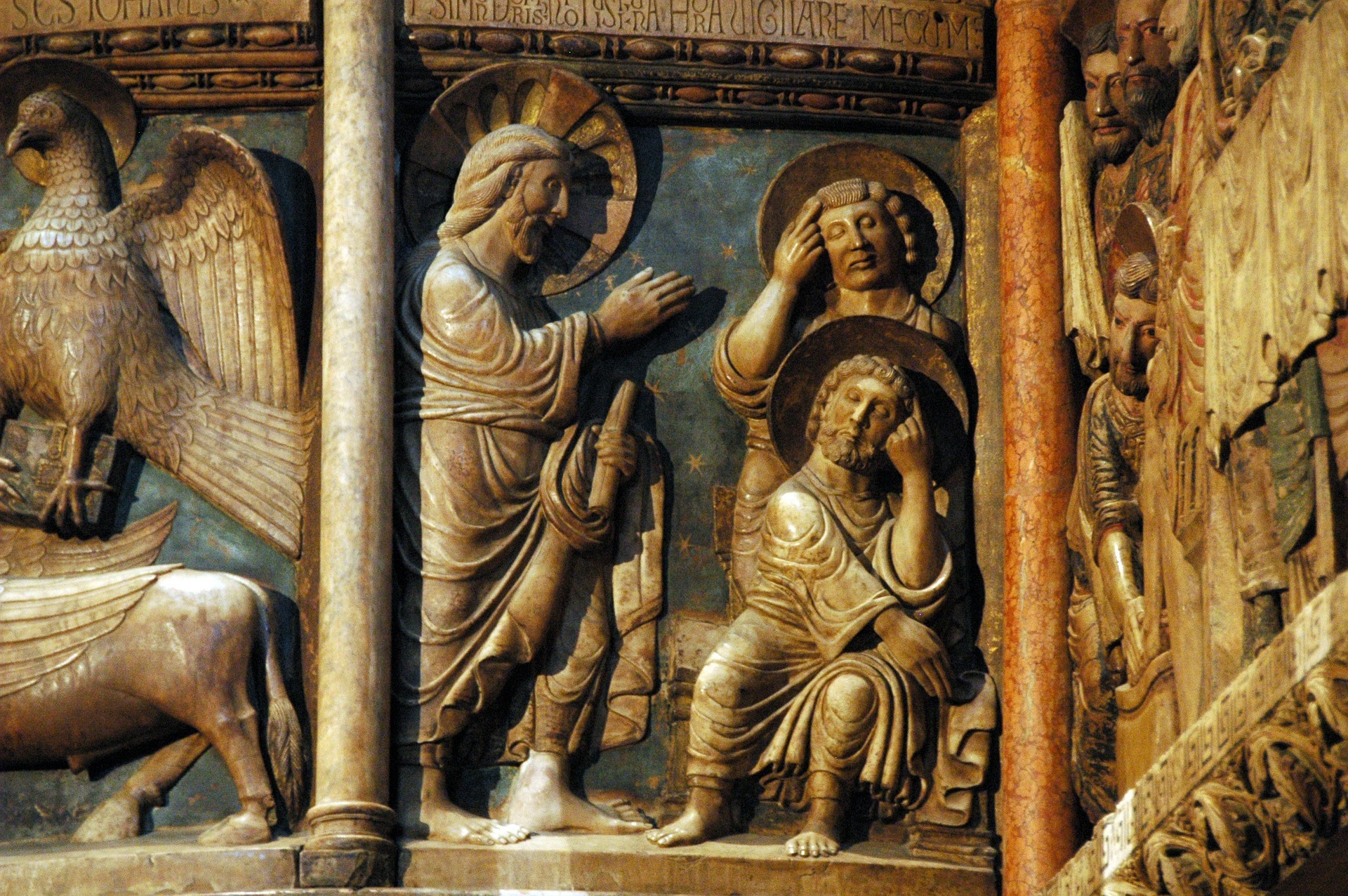
Founded 800 years ago, the mother church of the city—in Italian the Church of San Silvestro Papa—bears the name of its patron saint who, legend has it, watched over the inhabitants' safety against barbarian incursions. The austere and bare façade should not discourage you: as you approach the altar, you will find a magnificent altarpiece in Carrara marble conceived by Bartolomeo Berrettaro and Giuliano Mancino, which critics regard as a Renaissance jewel.
The Church of Saint Michael the Archangel
It is difficult to pass by the splendid Franciscan church, whose name is associated with the veneration of the archangel Saint Michael. The quality of its stuccos and painted canvases will leave visitors speechless.
The Church of the Holy Cross
Built on the remains of an old church dedicated to Saint Catherine of Alexandria, this building features a wooden crucifix to which popular belief attributes healing powers.
Practical Information
When to Visit Segesta?
Located in the Sicilian region, Segeste experiences a pronounced Mediterranean climate: summer dryness succeeds cool, humid winters. In July and August, temperatures can reach 35°C. Summer is an ideal travel season, but prepare yourself for crowds of tourists. The clever ones will choose dates in spring, between May and mid-June. Days warm up during this season without being scorching, and the flowering of the orchards brings the landscapes to life.
With its robust road network, visiting Segeste has never been easier, whether you are an Italian or foreign tourist. The city is approximately 32.5 km from Trapani via the A29 highway, and 73.5 km from Palermo, Sicily's capital.
Prefer public transportation? Bus lines operated by the Tarandola company connect the cities of Palermo, Castellamare del Golfo, and Alcamo, departing each hour. All stop at Calatafimi-Segesta.
You Will Love…
taking a guided tour of the Segeste archaeological site;
studying the sculptural details of the Doric temple;
contemplating the colonnade;
exploring the splendid ruins of the Greek theater;
imagining what the city of Segeste looked like two thousand years ago;
dining al fresco with family;
strolling through the medieval village.
Want to discover this destination?
Our local advisors design your tailor-made trip.