Château Brown
Château Brown
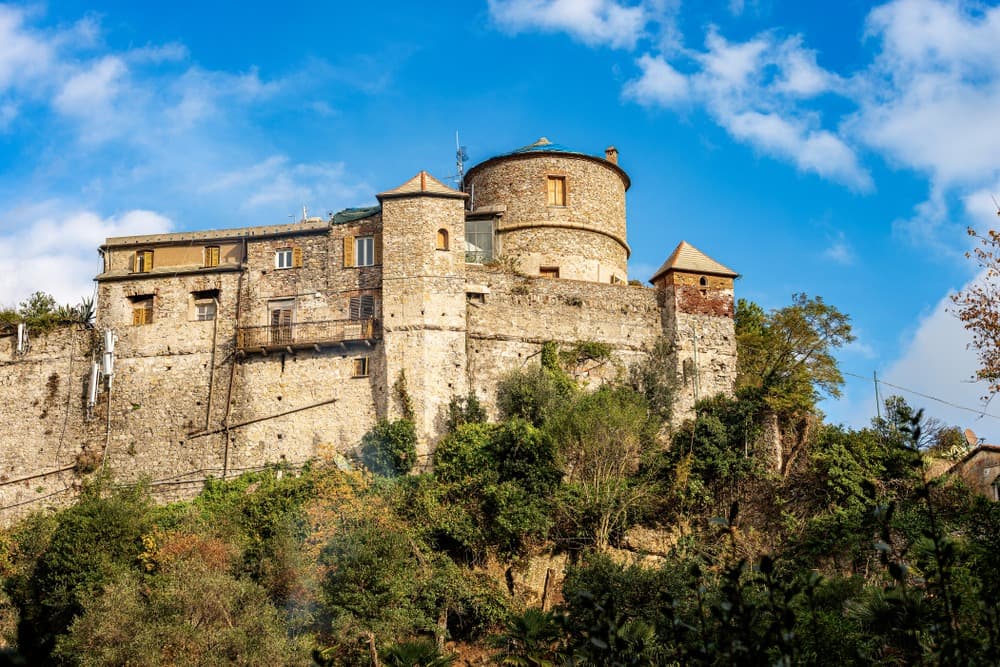
A Genoese fortress turned British residence in the 19th century, Castello Brown dominates Portofino's harbor and offers one of the finest views along the Ligurian Riviera.
Perched on a rocky promontory overlooking the port of Portofino, the Castello Brown has occupied a strategic position on the Gulf of Tigullio since antiquity. A Genoese fortress transformed into a British residence in the 19th century, it today offers one of the finest viewpoints over the bay and the village.
Why visit Castello Brown
The castle brings together three complementary interests. First, a rich historical layer: the site once held a Roman watchtower before becoming a defensive fortress against Saracen raids, then a Genoese outpost remodeled in the 16th century. Second, a domestic dimension: the purchase by British consul Montague Yeats Brown in 1867 transformed the military structure into a family residence, whose interior arrangements remain legible today. Finally, the view—plunging over the horseshoe-shaped port and the Ligurian coast—which alone justifies the climb from the village.
History of the castle
Excavations have uncovered the remains of a watchtower dated between the 2nd and 3rd centuries, evidence of the site's first defensive role. The structure's primary function was to protect the gulf against Saracen raids that regularly threatened Ligurian shores in the Middle Ages. Locally, it is still called the "Castle of St. George," named after the church located on the access path from the port.
The Republic of Genoa took possession of the fort in the 16th century and reinforced it as part of its coastal defense system. Several military episodes are attributed to the castle's garrison: a victory in 1431 against an English fleet, an engagement in 1575 against Admiral Andrea Doria, and a feat of arms in 1814 against the Venetian fleet. In 1815, the small tower collapsed and Napoleon claimed it as a conquest, marking the end of the site's strictly military function.
The building subsequently fell into disrepair until 1867, when British consul Montague Yeats Brown purchased it and gave it its present name. His family retained it until the late 1940s, before handing it over to the British couple John and Joceline Baber. The castle was later acquired by the municipality of Portofino, which ensures its opening to the public.
What to see
- Interior rooms preserve the furniture and decoration from the Brown family era, with ceramic pieces, paintings, and period photographs that evoke life in the residence around the turn of the 20th century.
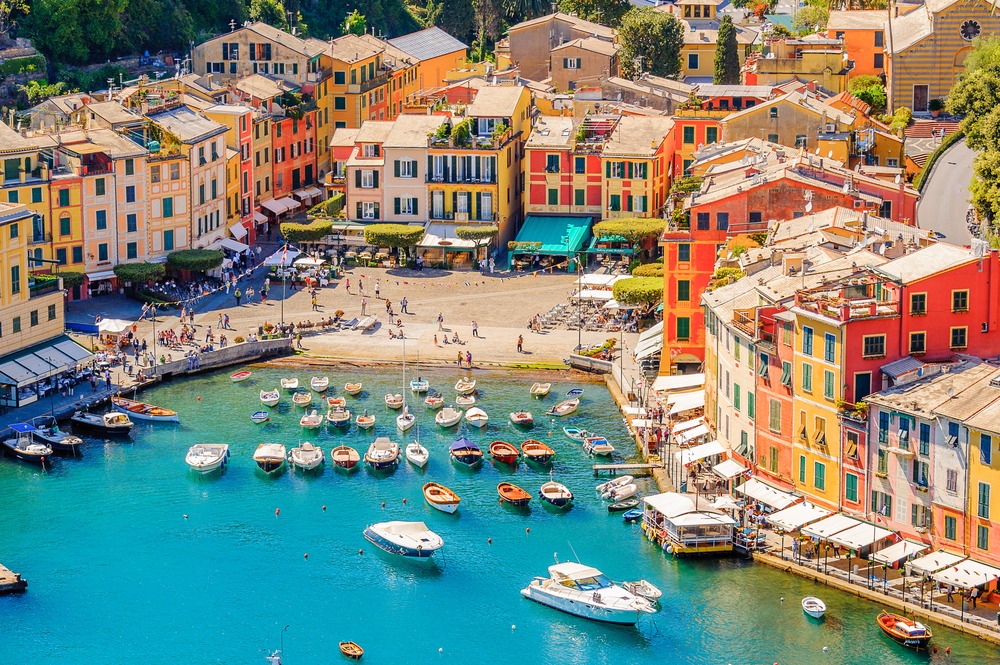
- The courtyard and terraces open onto a panoramic view of Portofino's harbor, the promontory, and the Gulf of Tigullio. It is one of the most recognizable vistas on the Italian Riviera.
- The garden, planted with umbrella pines, surrounds the building and invites you to extend your visit.
- The path to Portofino's lighthouse, located approximately 400 meters beyond the castle, naturally extends the tour across the promontory.
Practical information
The castle can be visited in about 1 hour, or longer if you extend the tour to the lighthouse. Admission is moderately priced; opening hours vary by season, with wider access in summer and occasional closures for private events. It is advisable to check opening hours with Portofino's tourist office the day before your visit.
Bring sturdy shoes: access is via a steep paved staircase. Avoid the hottest hours in July-August, with little shade on the climb.
How to get there
The castle is accessible only on foot from central Portofino. Allow about 10 minutes to climb the paved staircase that leaves the port and passes in front of the Church of St. George. To reach Portofino:
- From Santa Margherita Ligure: regular bus service along the coast (15-20 minutes) or shuttle boat in season.
- From Genoa: train to Santa Margherita, then bus or boat. Allow approximately 1 hour 30 minutes total.
- By car: not recommended, as the village is in a restricted traffic zone and parking is severely limited.
When to go
Late spring (May-June) and early autumn (September-October) offer the best conditions: mild temperatures, clear light for views, and fewer crowds than peak summer. July and August concentrate the majority of visitors, and queues can be long on the access staircase. In winter, some opening days are reduced, but the light over the gulf remains exceptional.
Nearby attractions
- The village of Portofino itself, with its horseshoe-shaped harbor and colorful facades.
- The Abbey of San Fruttuoso, accessible by boat from Portofino or by hiking trail through the regional park.
- Portofino's lighthouse, 400 meters beyond the castle, at the tip of the promontory.
- Santa Margherita Ligure and Camogli, two villages on the Ligurian Riviera with livelier atmospheres.
Frequently asked questions
Frequently asked questions
Castello Brown integrates easily into an itinerary along the Ligurian Riviera and northern Italie. To plan a complete itinerary, consult our Italy travel experiences.
Interested in this visit?
We can include it in your personalised itinerary.