The Langhe
The Langhe
Unesco-listed vineyards, medieval castles and Alba white truffle: everything you need to plan your stay in the Langhe, at the heart of Italian Piedmont.
The Langhe comprise a collection of charming hillside villages in northwestern Italie, in the heart of Piedmont. The region is celebrated for its castles, centuries-old vineyards and gastronomic traditions. Here's what you need to know.
Introduction
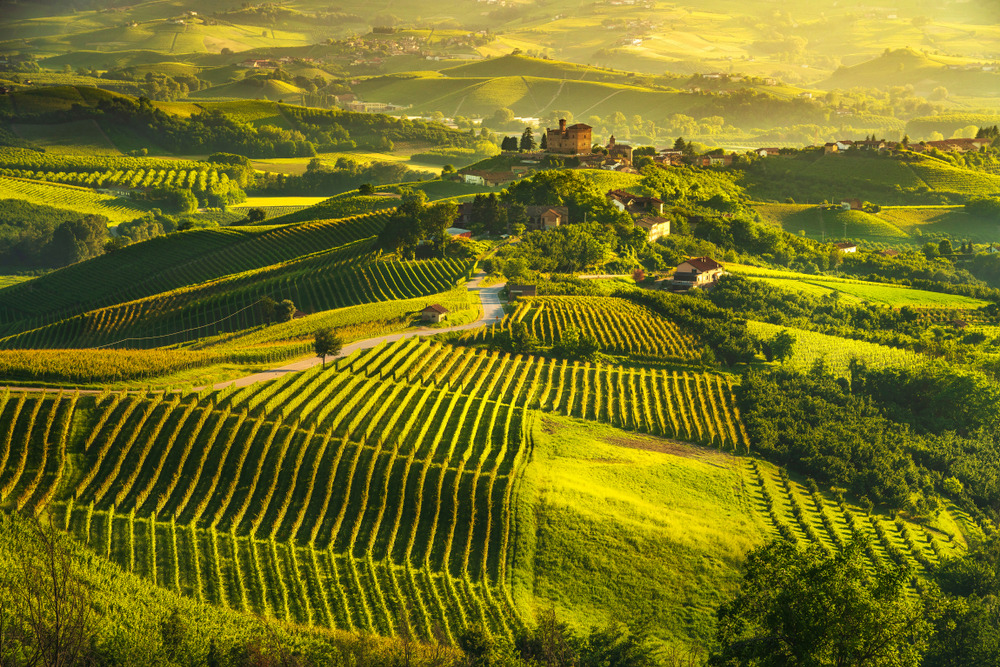
Staying in the Langhe is a genuine delight for any traveler who combines the soul of a wanderer with the appetite of a gourmet. Just 60 kilometers from Turin, between the provinces of Cuneo and Asti, the Langhe reveal agricultural landscapes as old as time itself, among Piedmont's most breathtaking scenery, in northwestern Italie. Welcome to the land of gentle rolling hills, climbing vine trellises and gastronomic pleasures! You'll discover vernacular architecture featuring bell-tower churches, fortified towers and manor houses, recognized by Unesco itself. The characteristic villages of the Langhe—Alba, the truffle capital, Barolo, the former stronghold of the Faletti family, Barbaresco, the hillside vineyard town, or La Morra—have managed to preserve a bucolic setting that's hard to resist. Take flight to the Langhe, the ultimate destination for a honeymoon or family vacation in northern Italie.
A touch of history
Etymology supports the French pronunciation of the Langhe as "langue." Yet the Latin word "Langa" does not allude to the palate, but rather to the singular topography of the region's hills.
At its origins, the region was designated Feuda Langarum by the Romans. It is a landscape of endless hills, stretching from the lowlands of the Po Valley to the soaring peaks of the Apennines.
Following the collapse of the Roman Empire, the Langhe came under the rule of the Aleramici family, a branch of the Carolingians. The Franks subsequently had to yield to the Lombards and Visconti, who controlled the Langhe until the eighteenth century, when the House of Savoy established its sovereignty over Piedmont. The region was then divided into some fifty fiefs governed by feudal lords.
Ultimately, the wine economy of the Langhe mirrors its etymological origins. For indeed, the Langhe produce fine wine that fills us with sweet intoxication and rejuvenates our palate. So one might say that coming to the Langhe means both "seeing an ocean of hills that fill sky and earth," as writer Cesare Pavese would say, while indulging your taste buds with a glass of DOC wine, ranked among the world's finest vintages.
Indeed, the nineteenth century saw the region ravaged by poverty and massive urban migration, partly explained by the upheaval of the French Revolution. Fortunately, the resurgence of profitable agricultural sectors, boosted by tourism, enabled the region to achieve rapid and sustainable development.
The modern era
The economy of the Langhe is inseparable from fine wine. Viticulture shapes the landscape, marks the rhythm of the seasons and produces Bacchus's liqueur, a fitting reward for a year of hard work. Piedmont wines have earned DOC status—"Denominazione di Origine Controllata," which guarantees their quality and geographic origin.
The rise of tourism has considerably boosted rural incomes. The region emphasizes hiking tourism through the vineyards, gastronomic tourism and cultural tourism. Summer visitor numbers have grown steadily since 2014, when the site was inscribed as a Unesco World Heritage site.
What to see and do…
Walking tour exploring wine country landscapes
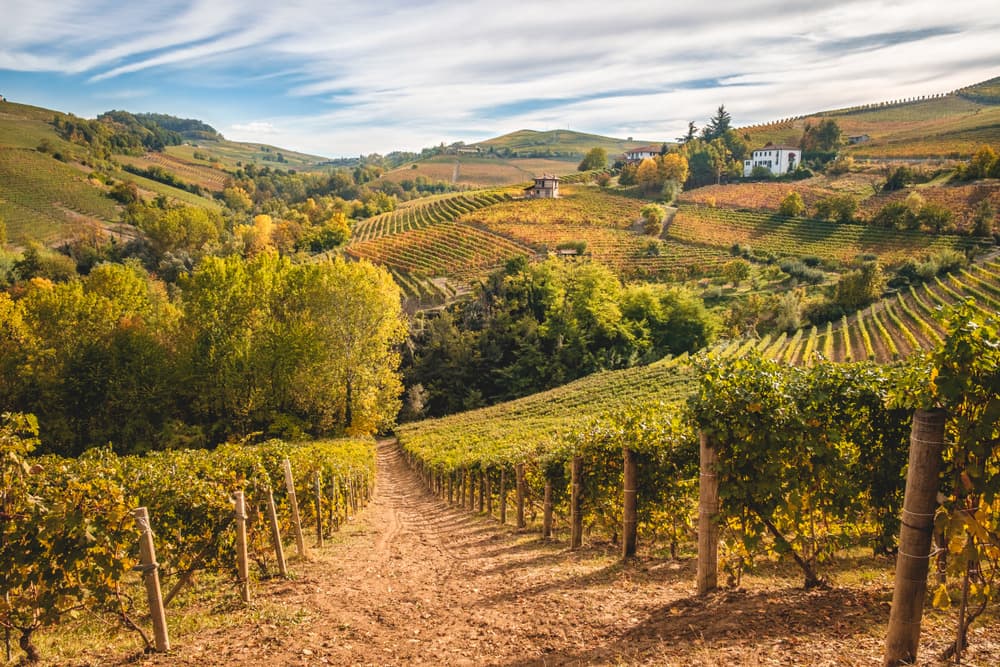
Nothing beats a hiking expedition to explore the rolling vineyards of the Langhe and immerse yourself in wine country. The king of grape varieties, "nebbiolo," covers every plot: it's recognizable by its dark berries and leaves that turn golden in autumn. Distinctive red wines are produced from this varietal: Barolo, Barbaresco, Roero…
If you're traveling with family, visiting a viticulture farm offers a chance to share a cascade of emotions. From the joy of discovering a master's castle in the middle of the countryside to stepping into wine storage cellars, where wines age for two years before gracing the world's finest tables, to experiencing an unforgettable harvest day… In the Langhe, winemaking is a traditional craft dating back centuries, and farm management is passed down from father to son. It's truly remarkable to discover that a DOC wine, far from being a mundane industrial beverage, tells the story of love, joie de vivre and a village's cultural identity. The visit typically concludes with a tasting session—a delightful ritual that will delight any enthusiast!
A few villages worth visiting
Among recommended itineraries, you might begin with Alba, the flagship town of the Langhe. The vineyards are lovely to see at dawn, softened by a layer of mist before sunrise. Here stands the headquarters of Ferrero, the icon of Italian confectionery and chocolate making. Hazelnuts, cheeses, pasta, honey and pastries of every kind abound in the shops. Plenty to delight the children…in moderation!
Leaving Alba, head toward La Morra for a guided tour of the historic center or to climb its 513-meter belvedere, from which the view over the surrounding hills is breathtaking. La Morra's main attraction, however, is the Chapel of Our Lady of Grace (Madonna delle Grazie), with its charming fantastical colors thanks to artists David Tremlett and Sol Lewitt, who gave it a makeover in 1999.
If you prefer a more intimate and peaceful destination, head to Barbaresco, a tiny village of barely 1,200 inhabitants, which boasts some of Piedmont's finest panoramas. The town lent its name to an excellent wine—Barbaresco red wine—which has become a source of pride and national symbol. What more to say about Barolo, with its castle-museum dedicated to wine history, Grinzane Cavour, honoring the memory of Count Camillo Benso, the illustrious Italian patriot, or Roero—all three are Unesco World Heritage sites!
Churches and monuments
The medieval charm of the Langhe shines through its old castello, which have been transformed from gentlemen's residences into museums or wine storage cellars.
- Serralunga d'Alba Castle: In 1340, the property was granted to Pietrino Faletti in recognition of his military service. He transformed it into a fortified residence whose style departs from rectangular design and resembles more of a French keep, making Serralunga d'Alba one of the most striking examples of Piedmontese architecture. Art lovers will find beautiful frescoes depicting the martyrdom of Saint Catherine of Alexandria.
- Alfieri Castle: Completed in the second half of the seventeenth century, this manor recalls the grandeur of a bygone era, when the noble Alfieri family, ruling the village of Magliano Alfieri, derived wealth from gypsum trade. Worth seeing: the eagle room, the heraldry room and characteristic plaster vaults. The castle's right wing houses the Museum of Arts and Popular Traditions.
- Grinzane Cavour Manor: Located in the town of the same name, this noble residence of the Marquis of Busca now houses a café, wine cellar and starred restaurant. Its original layout has been preserved, though it was completely rehabilitated in 1961. The building's austere facade, featuring a tall central tower and four square and rounded corner towers, testifies to its military past. The castle museum opens a window onto the evolution of winemaking in the Langhe from Roman times to today.
- Barolo Castle: Dominating Piazza Faletti in the fortified town of Barolo, the castle is a visual treat through its architecture and a culinary delight as well. After visiting the Four Seasons room and the Heraldry room, head to the ground floor. Here you'll find Barolo's regional wine library, where visitors can enjoy celebrated reds in an enchanting setting.
A gastronomic journey through the Langhe
Alba, the international white truffle fair
The Langhe region owes much of its tourism success to the white truffle festival. This gastronomic gathering takes place in Alba each autumn, bringing together political figures and music and film stars from around the world. Truffle and wine take center stage, celebrated through concerts, street entertainment and tasting sessions. If you're seeking cultural immersion in the Langhe, attending this unique event between October and November is essential.
Beyond the truffle auction, there are agro-food stands showcasing the region's typical products: wine, chocolate, olive oil, honey…
Bra's weekly market in Roero
The village of Bra, the main town of Roero, is a must-visit for anyone wanting to discover the region's delicacies. Its Friday market is a true Ali Baba's cave: stretching from Spreitenbach Square to Giolitti Square, with the heart of the market on Piazza XX Settembre, where Town Hall stands just steps from Saint Andrew's Parish, visitors will find cheeses, breads and cured meats that are Bra's specialties.
Best season to visit the Langhe?
The climate of the Langhe is quintessentially Mediterranean. Dates between June and September seem ideal for planning a vacation in the Italian towns of the Langhe. To avoid the summer crowds, the savvy will opt for October, that sweet spot that escapes summer's scorching heat and precedes winter rains.
Alba is considered the gateway to the Langhe. The most convenient way to reach the Langhe is to book a Paris-Turin flight and from there take a direct train from Torino Porta Susa station to Alba's city center. The journey takes just over an hour and a quarter across 48 kilometers of track.
The most active airlines on this route are Lufthansa, Air Austral and Air France.
On-site activities
- Photograph the emblematic viticultural landscapes of the Langhe
- Take a guided tour of an artisanal cellar
- Sample the region's finest vintages (responsibly)
- Explore Alba's culinary specialties, including the famous white truffle
- Bring home artisanal products
- Pay homage to the unique facade of Serralunga Castle
- Stroll through the village of Monforte and admire its spectacular fortress
- Organize a family picnic in the village of Barbaresco
- Take a cultural break in one of the region's museums
Want to discover this destination?
Our local advisors design your tailor-made trip.