Puglia and Basilicata
From the heel of the Italian boot to the troglodytic sassi of Matera: a horizontal Italie of olive groves, white stone and peasant cuisine, to explore by car over 8 to 10 days.
Puglia occupies the heel of the Italian boot, a strip of land stretching 400 km between the Adriatic Sea to the east and the Ionian Sea to the west. The terrain remains modest, rarely rising above 600 m, and the horizon consists of century-old olive groves, dry stone walls and whitewashed villages. Basilicata, sandwiched between Puglia, Campania and Calabria, presents an entirely different face: mountainous interior of the Lucanian Apennines, arid ravines and clay plateaus descending toward the Gulf of Taranto.
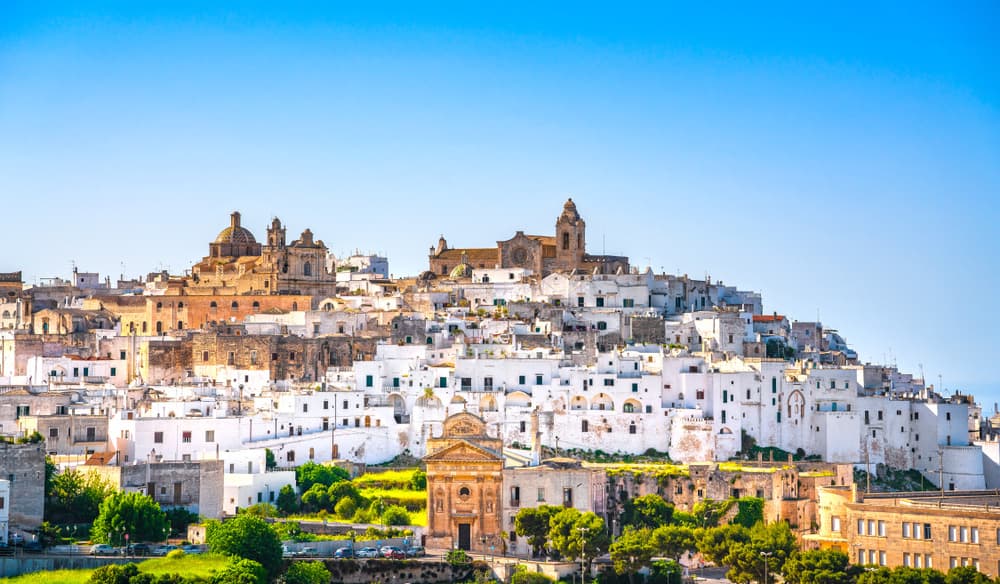
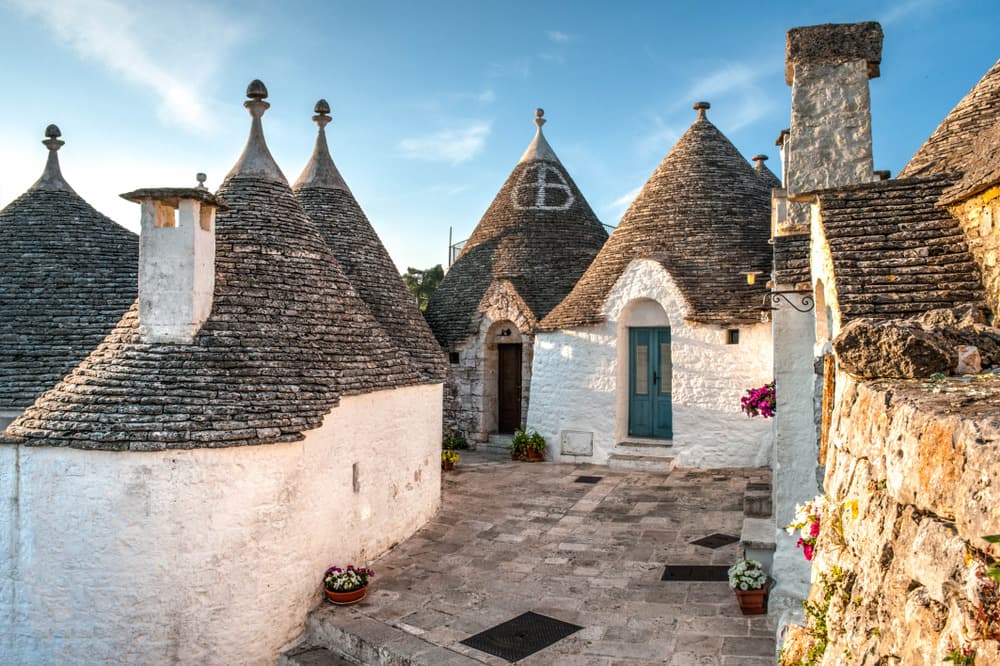
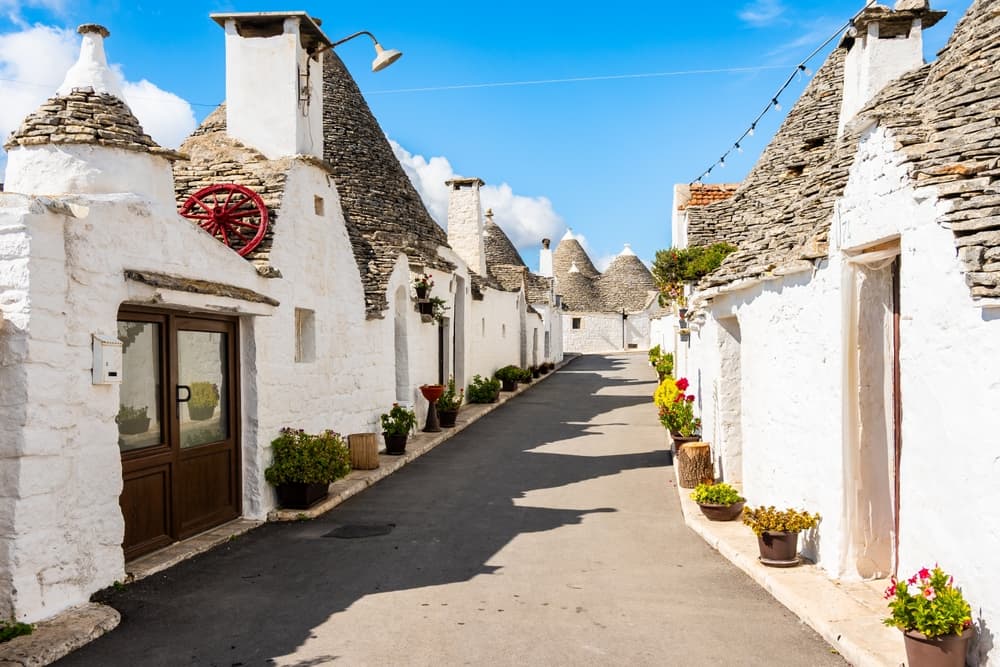
Our team works primarily with four sub-regions of Puglia. The Itria Valley, between Alberobello, Locorotondo, Cisternino and Martina Franca, concentrates the trulli, conical dry stone structures whose roofs are marked with painted symbols. To the south, Salento stretches from Lecce to Santa Maria di Leuca, with its honey-colored stone Baroque and small ports like Otrante and Gallipoli. The Adriatic coast, between Polignano a Mare and Monopoli, alternates limestone cliffs and narrow coves. Further north, the Gargano forms a wooded headland that contrasts with the surrounding flatness.
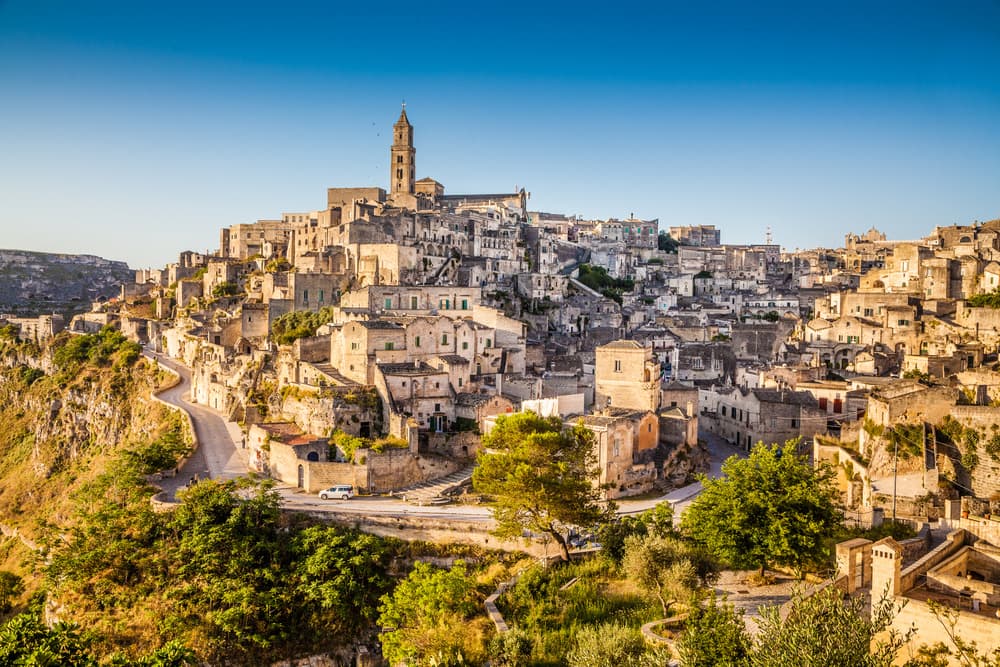
Basilicata hinges on two poles. Matera, a former troglodytic city inscribed as a UNESCO World Heritage site in 1993, lines its sassi, residential quarters carved into limestone tufa and inhabited continuously since the Paleolithic. The site was long considered a national embarrassment, emptied of its inhabitants in the 1950s, then rehabilitated from the 1980s onward. The second pole is the Ionian coast around Maratea, more secluded, where the mountains plunge directly into the sea.
The cuisine reflects a poor agriculture turned delicious: orecchiette with cime di rapa, fave e cicoria (fava bean and wild chicory purée), focaccia barese, burrata from Andria, taralli, Primitivo wines from Manduria and Negroamaro from Salento. Morning markets in Bari, Lecce or Matera offer a concrete reading of what the surrounding land produces. As for festivals, the Notte della Taranta in late August at Melpignano brings together tens of thousands of people around pizzica, the traditional dance of Salento.
The region lends itself well to car travel. The roads are flat, wide and uncrowded outside July-August. Distances remain reasonable: Bari-Lecce, 150 km by motorway, Matera-Alberobello, 70 km by secondary roads. The local economy rests on olive oil (Puglia produces nearly 40% of Italie's olive oil), viticulture, tourism and intensive market gardening. This dual identity—agricultural coast on one side, troglodytic landscape on the other—justifies combining Puglia and Basilicata systematically rather than treating them separately.
To discover
The sassi of Matera. Residential quarters carved into tufa, explored on foot early in the morning before the rush of visitors. Several house-museums detail living conditions until the forced evacuation of 1952.
The Itria Valley and its trulli. Two-day loop between Alberobello, Locorotondo and Cisternino, staying in a restored trullo in the midst of olive groves. Walk along the dry stone walls in late afternoon.
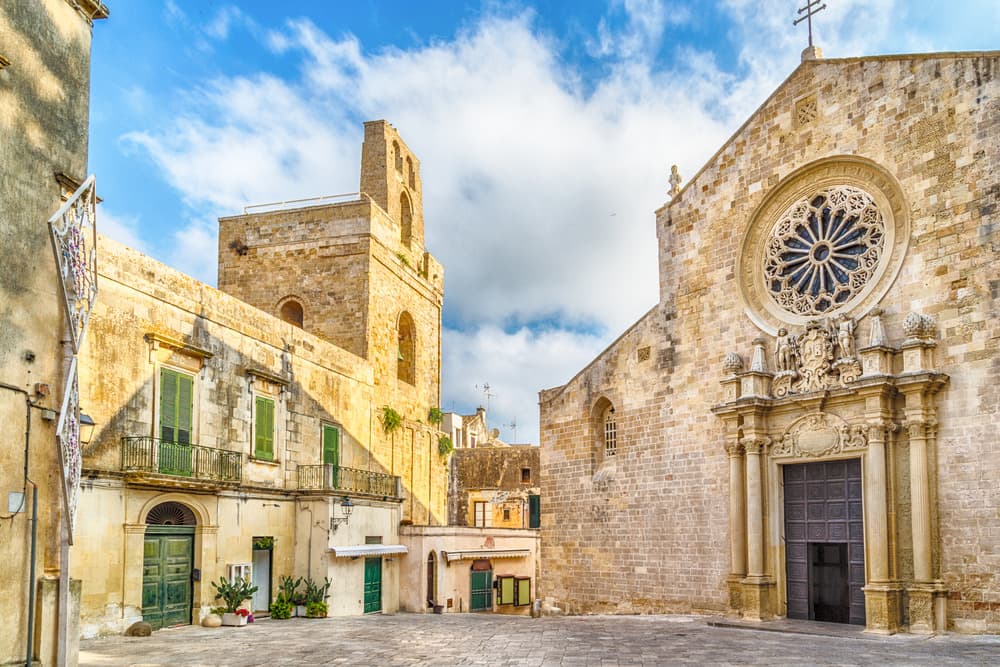
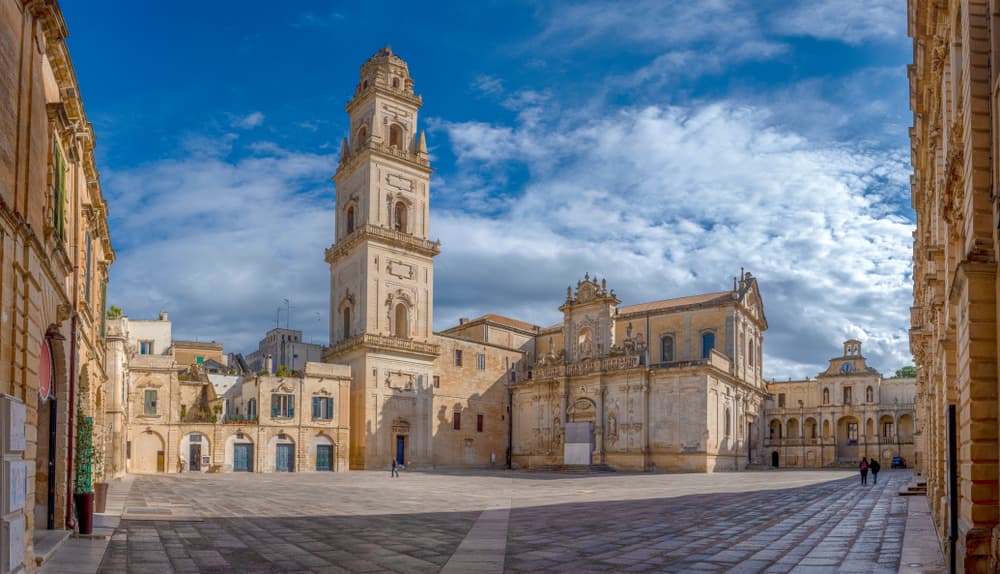
The Baroque of Lecce. Façades carved in the soft local stone, which mellows to a golden yellow. The Basilica of Santa Croce and the Cathedral square are visited in half a day, followed by a tasting of pasticciotti.
The coves of the Adriatic coast. Polignano a Mare and its secluded Lama Monachile beach, the marine caves of Monopoli accessible by boat, and further south the turquoise waters of Torre dell'Orso and Porto Badisco.
The peasant cuisine of Salento. Workshop making orecchiette in a masseria near Ostuni, raw fish lunch in Gallipoli, dinner based on fave e cicoria and horsemeat, a specialty of the Martina Franca region.
When to go
The most comfortable window extends from mid-May to end of June, then from early September to mid-October. Daytime temperatures oscillate between 22 and 28 °C, the sea exceeds 22 °C from the second half of May and remains swimmable until mid-October. The olive groves are green, the villages still livable, seaside restaurants open without being saturated. April and early May suit visiting cities (Lecce, Matera, Bari) with 18-22 °C, but swimming remains cool.
July and August combine the drawbacks: 35 to 38 °C indoors (Matera is particularly stifling, the stone gives off heat at night), crowds on the Salento coast, prices doubled in the masserie. We advise against this period except for school calendar constraints, in which case we prioritize beachfront accommodations with a pool. Winter (December to February) is mild on the coast, 10-14 °C, but many establishments close from November to Easter, and short days limit sightseeing. Rainfall remains low, around 600 mm annually, concentrated in autumn and winter.
Practical advice
We recommend a minimum of 8 to 9 days on site: 6 nights in Puglia divided between the Itria Valley (3 nights), Salento (2 nights) and the Adriatic coast (1 night), then 2 nights in Matera. Below that, the itinerary becomes frustrating given the distances between Lecce to the south and Matera to the northwest, roughly 220 km. The logical entry point is Bari airport, well served from Paris, Brussels and Geneva, with a car rental essential. Brindisi airport offers an alternative for starting with Salento.
The region combines well with Rome and Latium, arriving by high-speed train to Bari (4 hours from Rome) then departing by plane. Combining with Sicily requires a domestic flight or overnight ferry from Bari. Conversely, adding Puglia to Tuscany or the Dolomites significantly lengthens journeys and we advise against it in less than three weeks. Hotel comfort is high: rehabilitated masserie (former fortified farms), fitted trulli, troglodytic hotels in Matera. The region suits couples, families with children from age 6 onward (sandy beaches south of Gallipoli), and contemplative travelers who embrace a slow pace, organized around meals and late afternoons on the terrace.