Sicily
Sicily
The largest island in the Mediterranean, Sicily brings together Greek temples, Byzantine mosaics, turquoise beaches and active volcanoes. Our complete guide to planning your trip.
Sicily is the largest island in the Mediterranean Sea. Wild beaches and coves, paradise islands, Greek ruins at Palermo or Segesta, small villages dotted with olive groves and vineyards… Sicily plays the diversity card to captivate travelers.
A trip to Sicily: a destination of a thousand facets
A trip to Sicily can ring in every tone imaginable. Positioned at the tip of the Italian peninsula, the island whispers countless stories behind its Greek temples, Roman theatres and castles dating from the Lombard and Norman eras. Would you like to lounge on a white sand beach? The coastal villages of Scopello, San Vito Lo Capo and Marsala offer you the splendor of the Mediterranean. Planning to escape into nature? The wild paradise of Zingaro champions environmental tourism by combining spectacular coves with preserved endemic vegetation. Olive and vineyard fields, pinewood forests, the majestic volcanoes of the Aeolian Islands invite you on a rewarding hike to add spice to your honeymoon or your romantic weekend in Sicily. For a family trip, travel outside the summer season and pay homage to unmissable museum-cities like Erice, Segesta and Palermo, where historical memories stretch back to the Trojan War era. The range of tourism offerings is remarkable, despite the clear dominance of beach tourism and heritage visits. Book a bespoke tour in Sicily and return from the island with a sense of wonder, discovery and disconnection.
History
Sicily, as an island territory, has a somewhat different history from neighboring Italie. Visitors already appreciate it for its natural environment, but they will certainly grow even more attached to it upon learning its history.
By virtue of its position at the heart of the Mediterranean, Sicily was an object of strategic conquest for the Phoenicians, Greeks and Romans who sought to control maritime routes and prevent enemy incursions. Some Sicilian cities have the honor of seeing their names appear in ancient Greek literature. When the Greeks conquered Troy and delivered it to the flames, Trojan refugees were able to reach Sicily by crossing the Mediterranean. They founded Segesta and Erice. In the Aeneid, Virgil recounts how Aeneas traveled to Erice and built a temple dedicated to the worship of Aphrodite.
After the collapse of the Roman Empire, the Lombards spared Sicily. In the centuries that followed, it fell under the rule of feudal noble families.
From this turbulent past, Sicily drew an unparalleled architectural heritage. Fortified castles, churches and palatial mansions alternate through the narrow streets, expressing the artistic movements of the Middle Ages and Renaissance. In some cases, the prestige of the architecture is coupled with craftwork practiced for many generations: wines for Marsala, ceramics for Caltagirone and Catania, and puppet theatre for several destinations.
In 1860, Sicily joined unified Italie. Economically speaking, gaps with northern Italie persist. The unemployment problem, which the tourism boom has eased without eliminating, remains a concern. Sicily is still, in many respects, associated with the Mezzogiorno.
Today
Sicilian tourism is moving along a promising path. The island welcomes Western European travelers with open arms, provided a rapid vaccination test upon arrival at the border. Palermo is the capital and largest city of Sicily. There are many reasons to visit Palermo:
- Examine artworks in museums,
- Discover a UNESCO World Heritage site,
- Visit Europe's street food capital.
But Sicily extends well beyond Palermo. Nearly 1,500 km of coastline, dotted with coves, beaches and white sand; wild, unspoiled islands sheltering remarkable biodiversity; small hillside villages where vineyards stretch as far as the eye can see, not to mention the awe-inspiring heights of Etna. Sicily is a destination for all ages and all tastes.
These brief lines, drawn from a travel account by Guy de Maupassant, do justice to the island's attractions:
"Sicily must exert a double attraction on travelers: its natural and artistic beauties are as distinctive as they are remarkable. […]. But what above all makes it a land to be seen and unique in the world is the fact that, from end to end, it can be defined as a strange and divine museum of architecture."
More than ever, Sicily showcases spectacular beaches and treasures of medieval art.
In Sicily, you walk in the footsteps of archaeologists
Sicily holds countless remains of ancient Greece and Rome. The Valley of the Temples at Agrigento, the Doric temple of Segesta and Selinunte are the most celebrated examples. At Erice, your visit transports you to the era of Aeneas—the Trojan hero—while also leading you to discover numerous Baroque churches. For Roman ruins, three destinations compete: Catania with its Roman theatre, Termini-Imerese with the Aqueduct of Cornelius, and Piazza Armerina with the Villa Casale, listed as a UNESCO World Heritage site. This summer palace of Maximilian is worth the detour for its charming mosaics, the creation of which was entrusted to marquetry experts brought specially from North Africa. Situated on the Ionian coast, the city of Syracuse offers Greco-Roman buildings infused with Byzantine elements. The collection has no equal anywhere in Italie.
Palermo: the highlights of the capital city
Walking through the streets of Palermo is a must-see, whether for shopping or culinary experiences. Cannoli, panelle, stighhiole and arancini rice balls are among the dishes you absolutely must taste on site. Besides the fact that Palermo is Europe's street food capital, did you know it boasts eight UNESCO World Heritage sites?
- Palermo Cathedral, erected in the twelfth century in the Norman style and renovated in the eighteenth century with a Baroque nave;
- The Church of Santa Maria dell'Ammiraglio, celebrated for its Byzantine mosaics;
- The small Church of San Cataldo, attached to the previous church, where the consecration ceremony of the Knights of the Holy Sepulchre was held;
- The Palatine Chapel;
- The Admiral's Bridge;
- The Zisa Castle;
- The Church of San Giovanni degli Eremiti and the Royal or Norman Palace.
These monuments represent the finest expressions of Arab-Norman and Byzantine architecture in Italie.
Sicily's most beautiful seaside destinations
On the eastern and southern coasts you'll find the most picturesque seaside resorts in Sicily with their postcard-perfect settings:
- Taormina, where you willingly swim before climbing the volcanoes;
- Agrigento, where magnificent limestone staircases plunge steeply into the sea;
- Catania, where Norman castles, cliffs and turquoise waters compose a unique coastal stretch;
- Syracuse, which combines wild beaches with a world-class archaeological museum;
- Scopello, with its tonnara commemorating the tradition of tuna fishing;
- San Vito La Capo, which delights hikers with its olive and vineyard-covered hills.
Sicily's ecotourism destinations
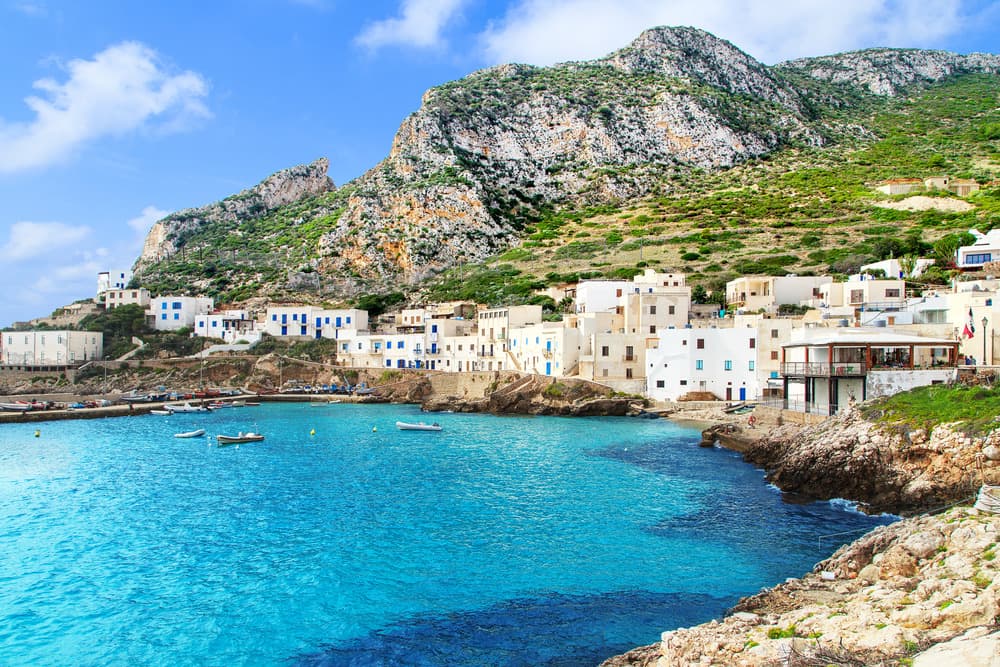
Nature lovers visiting Sicily will find what they're looking for in the Zingaro Nature Reserve. From Scopello to San Vito Lo Capo, a true paradise unfolds between caves, deserted coves and fairy-tale needles rising from the sea. With its turquoise waters beaches, free from hotels and cars but filled with seabirds, the Egadi Islands are highly acclaimed. Alternatively, the cruise to the Aeolian Islands from the port of Milazzo is equally popular. Climbing Mount Etna, Europe's highest volcano, will leave you with unforgettable memories.
When to visit Sicily?
Thanks to the mild Mediterranean climate, Sicily can be visited in any season. Peak attendance occurs in July and August. Tourists take advantage of summer dryness to swim, relax on the beach and enjoy the nightlife. Traveling in April or October would help you avoid crowds as well as price increases at hotels and airlines.
In winter, Sicily welcomes tourists from Northern Europe. These visitors come seeking their share of sunshine, even if the beach is hardly recommended during this period. If you're interested in culture, food and fine wines, archaeology, history and architectural treasures and aren't chasing beaches, January through April is ideal for planning a bespoke trip to Sicily.
To reach Sicily, foreign tourists can book a direct flight to Palermo. Many airlines offer inexpensive flights between Paris and Palermo: Air France, Ryanair and Transavia. Each week, about a dozen direct flights are available from France.
After two and a half hours of flight time, you land at Palermo Falcone-Borsellino international airport. To reach the city center, you'll need to cover 30 km by boarding a train, bus or shuttle. In the first case, head to Punta Raisi terminus, right next to the airport, and take the Trinacria Express train. Plan on approximately 1 hour of travel for €5.90 per ticket, which you can purchase online or on site.
Getting around Sicily
Bus is certainly the most convenient way to travel around Sicily. Hydrofoils and ferries serve coastal stations (Marsala, Palermo, Messina) and islands (Aeolian Islands and Egadi Islands). For independent travel, you can of course rent a car.
Want to discover this destination?
Our local advisors design your tailor-made trip.