Cinque Terre National Park
Cinque Terre National Park
Five villages clinging to cliffsides, terraced vineyards and colorful fishing ports: complete guide to Cinque Terre, a Ligurian gem inscribed on the UNESCO World Heritage List.
Cinque Terre refers to five seaside villages in northwestern Italie, stretching along the magnificent Levant riviera. Renowned for the quality of its vineyards and its mountain-perched villages, this destination has earned its credentials as a premier tourism destination. Here's an in-depth look.
Introduction
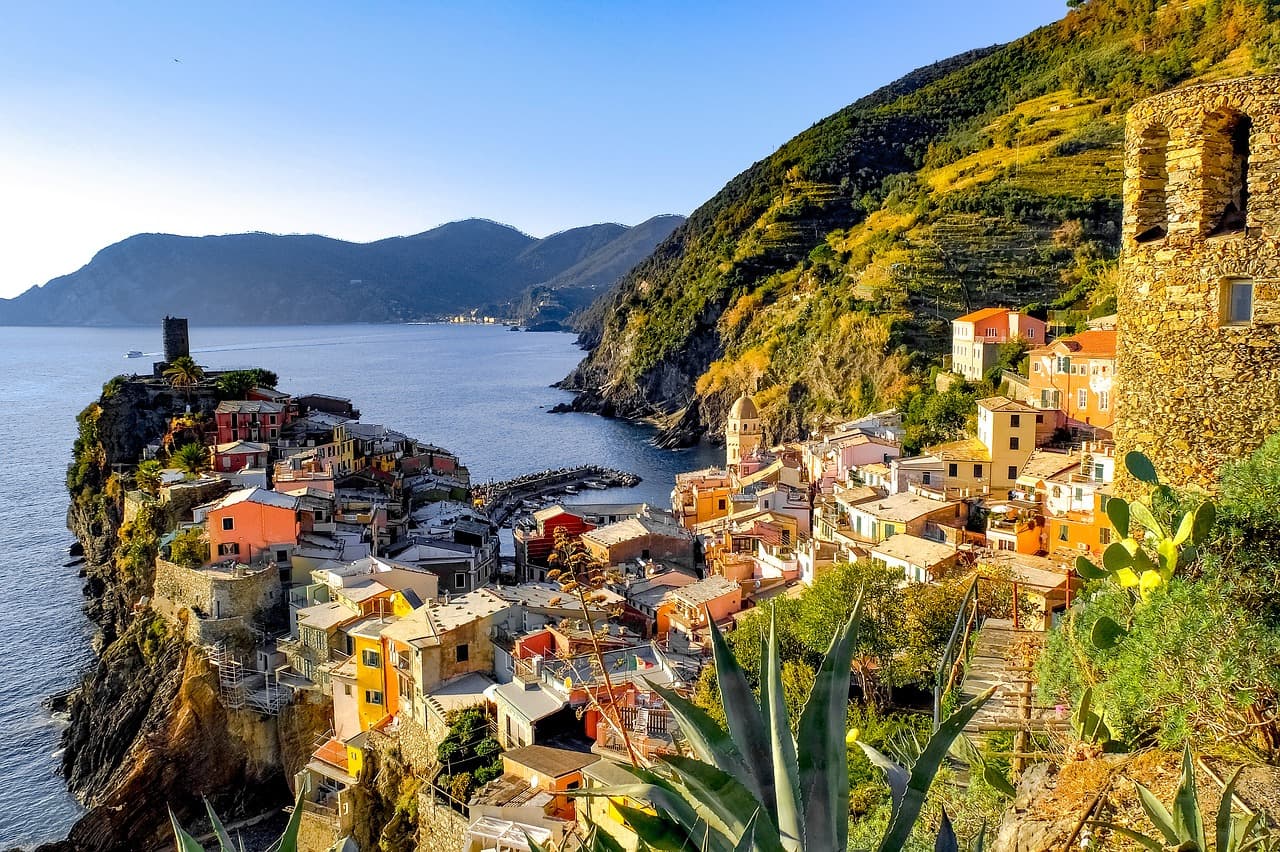
As an alternative to summer vacations in Corsica or the Bouches-du-Rhône, the Cinque Terre coastline attracts thousands of tourists each year. From Vernazzo to Riomaggiore, from Manarola to Corniglia, beginning with the historic center of Monterosso, it's truly breathtaking to see villages built into cliffsides, with crops carefully arranged in terraces to soften the challenging terrain. Just 80 km from Genoa, Liguria's capital, the Cinque Terre villages distinguish themselves from their splendid rival through a country atmosphere, combining the charm of vineyards, the vibrancy of fishermen's houses, the majesty of Genoese fortresses, and the unexpected delights of marine cuisine. Escape to Cinque Terre, a delightful gem of Liguria**,** and discover the sand, sea, and dreamy beaches of the Mediterranean.
History
Legend speaks of ancient Roman camps established at the sites of Monterosso and Vernazzo. It's quite likely that horse-drawn carriages traveled the coastal road when dispatching royal messages to Roman dependencies. The Latin roots of geographical place names – such as Manarola (from Latin Manium Arula, meaning small altar of Mani), Vernazzo (from the adjective verna or "native") or Volastra (from Latin Vicus oleaster or the land of wild olives) – support this hypothesis.
Documented sources about Cinque Terre date from the eleventh century. The birth of the five villages resulted from a dual phenomenon: the decline of the Saracen threat on one hand, and demographic expansion on the other, forcing agricultural communities from Val di Vara to extend their vine and olive fields closer to the coast.
The Republic of Genoa turned its attention to Vernazzo, whose prosperous port could serve as a strategic naval base in its policy of unifying Ligurian cities. Count Nicolò Fieschi counted Levanto, Riomaggiore, and four other Cinque Terre territories among his private properties, but he was forced to cede them to the Republic in 1276.
From the fourteenth to the eighteenth century, Cinque Terre experienced a golden age under Genoese rule. Military and religious architecture reached remarkable heights; citadels, manor houses, and fortified towers, each more impressive than the last, were erected to deter Turkish pirates. The region's wines were exported throughout Europe, bringing Cinque Terre international acclaim.
Following the fall of Napoleonic France, Cinque Terre passed to the hands of the Kingdom of Sardinia in 1815, before being conquered 46 years later by the Kingdom of Italie.
Today
The 1870s witnessed the advent of tourism in Cinque Terre, marked by the Genoa-Pisa railway project that would open Liguria's coasts to the rest of the world.
Olive oil, vineyards, basil, and citrus fruits form the main resources of local agriculture. The fishing industry is also very active, particularly in Monterosso. It's not uncommon to encounter farms practicing beekeeping: acacia honey, chestnut honey, and honey ice cream are local delicacies absolutely worth tasting.
The first half of the nineteenth century saw a surge in emigration, as peasants sought to escape poverty and the hardship of agricultural work. Subsequently, the labor exodus stabilized thanks to a new revenue source linked to tourism. The flourishing of hospitality establishments, such as restaurants, bed-and-breakfasts, and luxury hotels, is proof of this. Many farmers abandoned mass production to shift toward quality wines.
An increasingly sought-after destination, Cinque Terre is part of a unique agrarian landscape recognized globally, celebrated by UNESCO, which added it to the World Heritage List as early as 1997. You'll return satisfied, amazed, and culturally enriched from your visit.
Must-See Attractions
The five towns of Vernazzo, Riomaggiore, Manarola, Corniglia, and Monterosso house exceptional natural and religious heritage.
Cinque Terre National Park
Established in 1999, the Cinque Terre Nature Reserve is the smallest of Italie's protected areas, yet its 38.60 km² holds truly remarkable sites: rocky coastline, steep slopes, caves carved by waves, scrubland, heath landscapes crowned with pines, holm oaks, and cork oaks… The hiker's paradise is undoubtedly here.
Among the wild fauna of the reserve, one can find the peregrine falcon, which catches its prey in a diving flight, the raven, the Aesculapian snake, as well as more common mammals such as the fox or wild boar. The park's finest features are found in its marine species, notably the Posidonia seagrass meadows.
Churches
The villages have preserved traces of their medieval past through religious buildings.
- The Capuchin Fathers' Monastery, Monterosso: wonderfully perched on a rocky promontory, this monastery is a cherished excursion destination. Inaugurated in 1623, it originally belonged to the Franciscans. In 1810, Napoleon's officers requisitioned it to serve as their garrison until 1816, when the site resumed its function as a church. Visitors will delight in discovering religious paintings by Bernardo Castello and Anthony van Dyck.
- San Giovanni Battista Chapel, Riomaggiore: founded in 1340, according to the inscription on its façade, this Gothic chapel was erected in honor of the noble prophet John the Baptist. Take time to admire the sublime white marble rose window before appreciating the artistic pieces inside**.**
- The Sanctuary of San Pietro, Corniglia: the church of San Pietro**,** whose foundation stones were laid in 1334, is an undeniable masterpiece of Ligurian Gothic art. Notable features include the rose window, the ceiling adorned with luminous frescoes, and paintings by Prospero Luxardi. For information, San Pietro is the patron saint of the hamlet of Corniglia, and his feast day is celebrated on June 29 each year.
- The Sanctuary of Nostra Signora di Soviore, Monterosso: Located at 418 m above sea level, the Sanctuary of Our Lady of the Savior traces its roots to the Roman era. Manuscript evidence shows the site received a visit from Emperor Otto III around the year 996. A wooden statue of the Virgin Mary is its main attraction. To our knowledge, it is the very first church in Liguria.
Tourist Beaches
- Fegina Beach: Vibrant, joyful, and lively, Fegina beach is ideal for swimming and sunbathing. Coves, fine sand, and stone pines… Tourists come here to indulge in Italian dolce vita. After your stroll, you absolutely must savor the "foccacia," a pizza-like preparation seasoned with onion, cheese, fine herbs, and olive oil. Easy to access, the Fegina beach resort in Monterosso is the most touristy of the Cinque Terre.
One drawback: the no-car policy remains in effect, and luxury properties have invested in the beach, causing it to lose its authenticity.
- Guvano Beach, located 15 minutes' walk along the "Sentiero Azzurro," is also magnificent. Nestled in a bay with calm waters, it has earned Corniglia its reputation among tourists. That said, avoid visiting if you're planning family vacations in Cinque Terre. The beach is dedicated to naturists.
When to Visit Cinque Terre?
The Cinque Terre villages benefit from the mildness of the Mediterranean climate. Winters are moderate and summers are dry, with sunshine exceeding 8 hours per day. Average temperatures hover around 20° C between June and September. The lowest temperatures approach 9° C. There is therefore no single best season for a stay in Cinque Terre. If you love the beach, choose dates between June and September. But winter is also pleasant if you're traveling with children. They'll be delighted visiting the world's largest nativity scene.
Getting Around
Cinque Terre has the status of a "car-free zone," where vehicular traffic is prohibited. To tour the villages, hiking trails have been developed for leisure visitors. Trains and boats are the most popular means of transport, not to mention eco-friendly minibuses for tourists concerned with green economy principles.
You'll Love…
- Taking a hiking trek among the vineyards and olive groves
- Lounging on Fegina Beach, at the Monterosso seaside resort
- Savoring the rich, creative, and delicious cuisine of Cinque Terre
- Discovering Corniglia's medieval heritage
- Photographing the colorful houses clustered on Manarola's harbor
- Trekking to the Sanctuary of Our Lady of Montenero, an emblematic monument of Riomaggiore
- Observing the constant activity of fishing boats
- Trying sport fishing
- Enjoying scuba diving at the Cinque Terre Regional Park
Want to discover this destination?
Our local advisors design your tailor-made trip.