Basilica of Santa Croce
Basilica of Santa Croce
The world's largest Franciscan church, Santa Croce brings together in Florence Giotto's frescoes, Brunelleschi's Pazzi Chapel, and the tombs of Italy's greatest names.
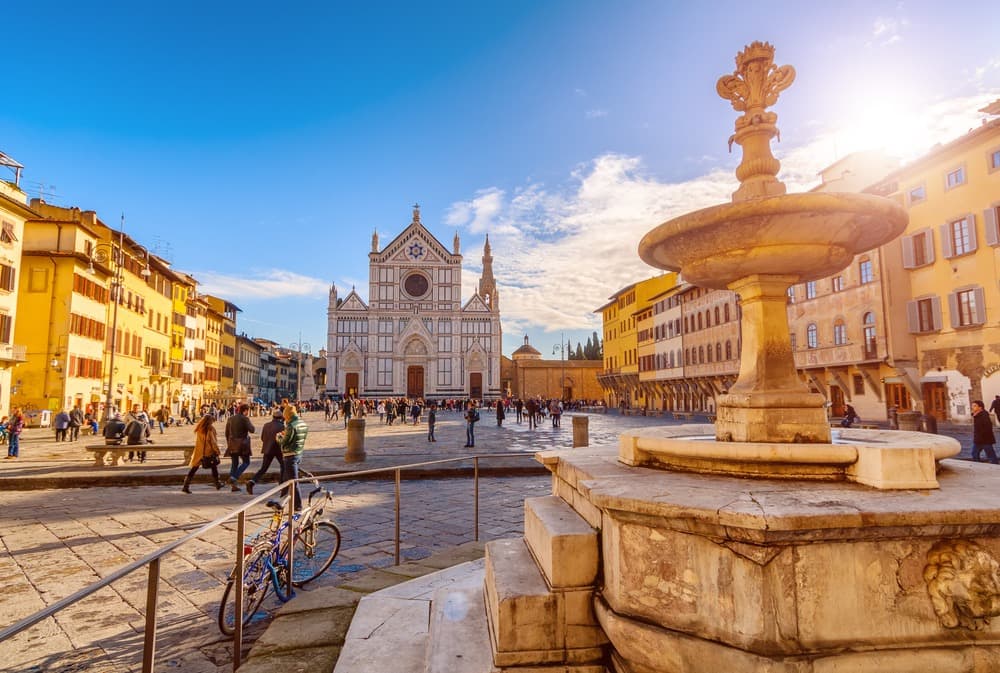
The Basilica of Santa Croce dominates the piazza of the same name in the historic center of Florence. The world's largest Franciscan church, it houses the tombs of Galileo, Michelangelo, Rossini, and Ghiberti, earning it the nickname pantheon of Italian glory. Its Neo-Gothic white marble façade and Giotto's fresco cycles make it one of the great landmarks of Tuscan art.
Why Visit Santa Croce
Santa Croce brings together three essential dimensions of Florence within a single building: Franciscan spirituality, the emergence of modern painting with Giotto, and the memory of Italy's greatest names in art and science. The basilica lines up eleven main chapels and five others at the ends of the transept, against the three usually expected in a conventional church. This density of works, combined with the Renaissance architecture of the adjacent Pazzi Chapel, justifies spending one to two hours here.
History
A first Franciscan convent was established on the site as early as 1252, shortly after the death of Saint Francis of Assisi. Deemed too modest, it was gradually abandoned in favor of a more ambitious project. Construction of the current basilica began on May 3, 1294 and was completed roughly a century later.
This scale was not without ulterior motives: the Franciscans intended to rival the Dominicans, who were building Santa Maria Novella at the opposite end of the city at the same time. To raise funds, the order relied on the great Florentine families, who in return obtained the right to develop their family chapels within the church's walls. This system, extended over centuries, gradually transformed the basilica into a secular necropolis as much as a religious one.
The adjacent monastery welcomed several major figures in the Church: Anthony of Padua, Bernardine of Siena, and Louis of Anjou all stayed there. From the Middle Ages through the Renaissance, Giotto's school practically established its permanent workshop there, making Santa Croce a laboratory of Tuscan painting.
What to See
The Façade and Piazza
The Neo-Gothic white marble façade, completed in the 19th century, features three triangular gables and a six-pointed blue star in the upper gable. The three portals are topped by tympana illustrating the legend of the True Cross: the Discovery of the Cross, the Triumph of the Cross, and the Vision of Constantine.
On the right side of the piazza stands the statue of Dante Alighieri sculpted by Enrico Pazi for the poet's 600th anniversary. Originally placed in the center of the piazza, it was moved in 1968 to make room for the Calcio Storico, the historic costumed football tournament held there annually.
The Bardi Chapel and Peruzzi Chapel
Located to the right of the main chapel, these two adjoining chapels house frescoes by Giotto at the height of his career. The Bardi Chapel displays a cycle devoted to the life of Saint Francis of Assisi in 28 relief partitions, as well as a series dedicated to Saint John the Evangelist and Saint John the Baptist. You can recognize the master's signature: economy of color, expressiveness of faces, eloquent gestures, and narrative freedom that presaged modern painting.
The Main Chapel and Baroncelli Chapel
The main chapel is decorated with frescoes by Agnolo Gaddi painted around 1380, devoted to the legend of the True Cross. The Baroncelli Chapel houses a Virgin and Child by Vincenzo Danti (1568) and a fresco cycle by Taddeo Gaddi, Giotto's student, on the life of the Virgin: the announcement to the shepherds, presentation at the temple, marriage to Joseph. Taddeo Gaddi experimented with perspective here with a then-innovative sense of relief.
The Pazzi Chapel and Castellani Chapel
Accessible from the first cloister, the Pazzi Chapel is a masterwork by Filippo Brunelleschi and a landmark of Renaissance architecture: refined geometry, pilasters in pietra serena, pendentive dome. The frieze is decorated with medallions of the apostles by Desiderio da Settignano. Next to it, the Castellani Chapel serves as an exhibition space for woodcut prints by Pietro Parigi.
The Pantheon of Italian Glory
The side aisles line the tombs of great Tuscan figures: Galileo, Michelangelo, Gioacchino Rossini, and Lorenzo Ghiberti. You will also find the cenotaph of Dante: this is a commemorative monument, not a tomb, as the poet is actually buried in Ravenna, which has always refused to return his remains to Florence.
Practical Information
- Visit Duration: allow 1 to 2 hours to tour the basilica, chapels, and cloister.
- Tickets: admission is paid at a moderate rate. Online booking is recommended during peak season to avoid queues.
- Dress Code: shoulders and knees covered, as in any Florentine religious building.
- Hours: open Monday to Saturday during the day and Sunday afternoons only. Check updated hours on the official website before your visit.
When to Visit
Florence is very busy from May to September, and Piazza Santa Croce is no exception. For a quieter visit, favor spring (March-April) or autumn (October-November), when the light particularly enhances the marble of the façade. In winter, crowds are low but the chapels can be chilly. On weekdays, the first hour of opening remains the quietest time slot.
How to Get There
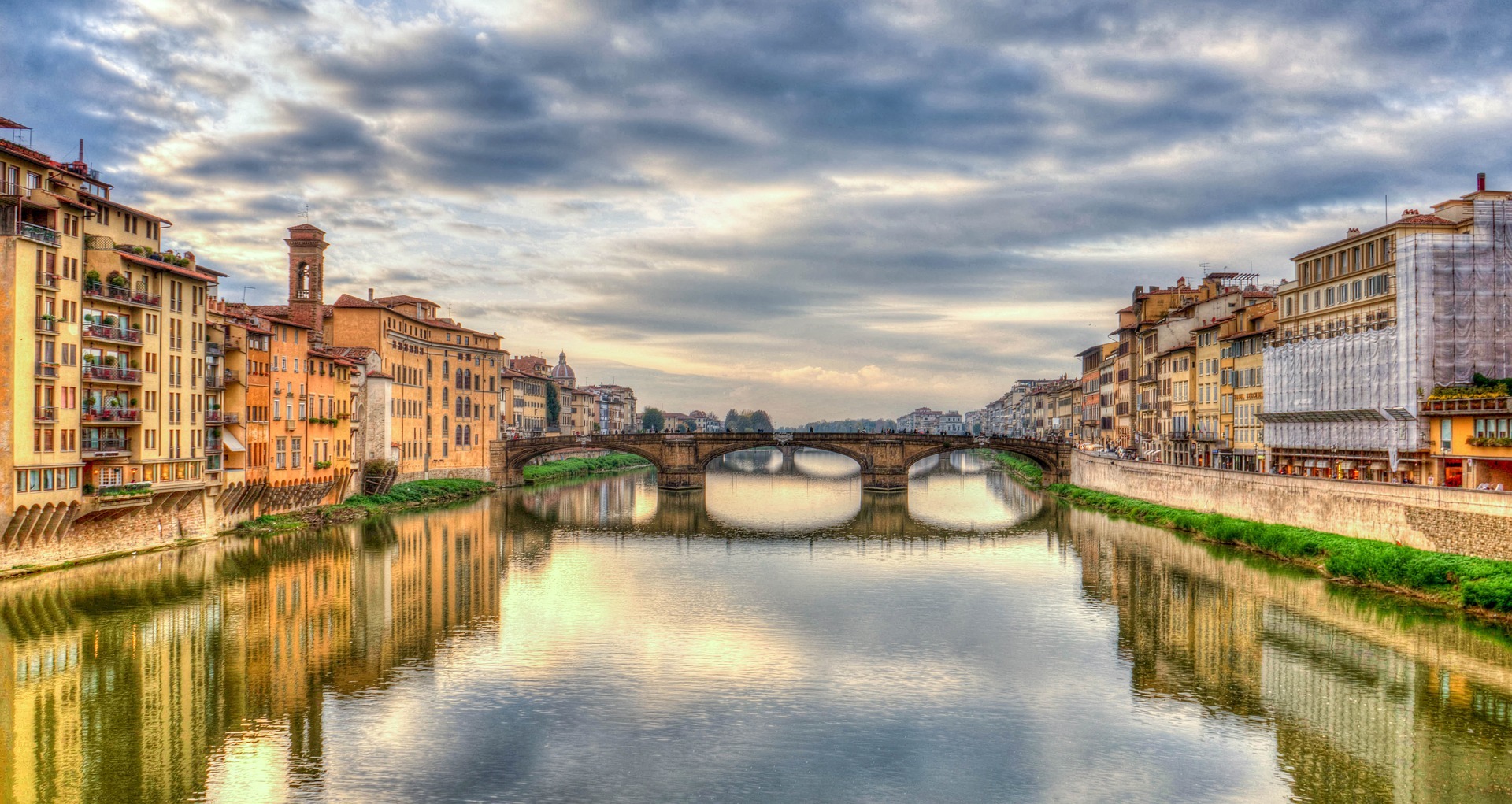
The basilica is located on Piazza Santa Croce, about 10 minutes on foot from the Duomo and 15 minutes from the Ponte Vecchio: walking remains the simplest way from the center. From Santa Maria Novella train station, you can reach the piazza on foot in about twenty minutes or take an urban bus line serving the historic center. Florence is not suited to cars, with the center largely in a limited traffic zone (ZTL).
What to See Nearby
Santa Croce fits into a broader journey through Tuscany and Italy. In Florence itself, visiting the city can extend around the Duomo, the Baptistry of Saint John, the Uffizi Gallery, and the basilica Santa Maria Novella, Santa Croce's Dominican sister.
If you extend your journey through Italy, several sites complement this heritage and natural panorama:
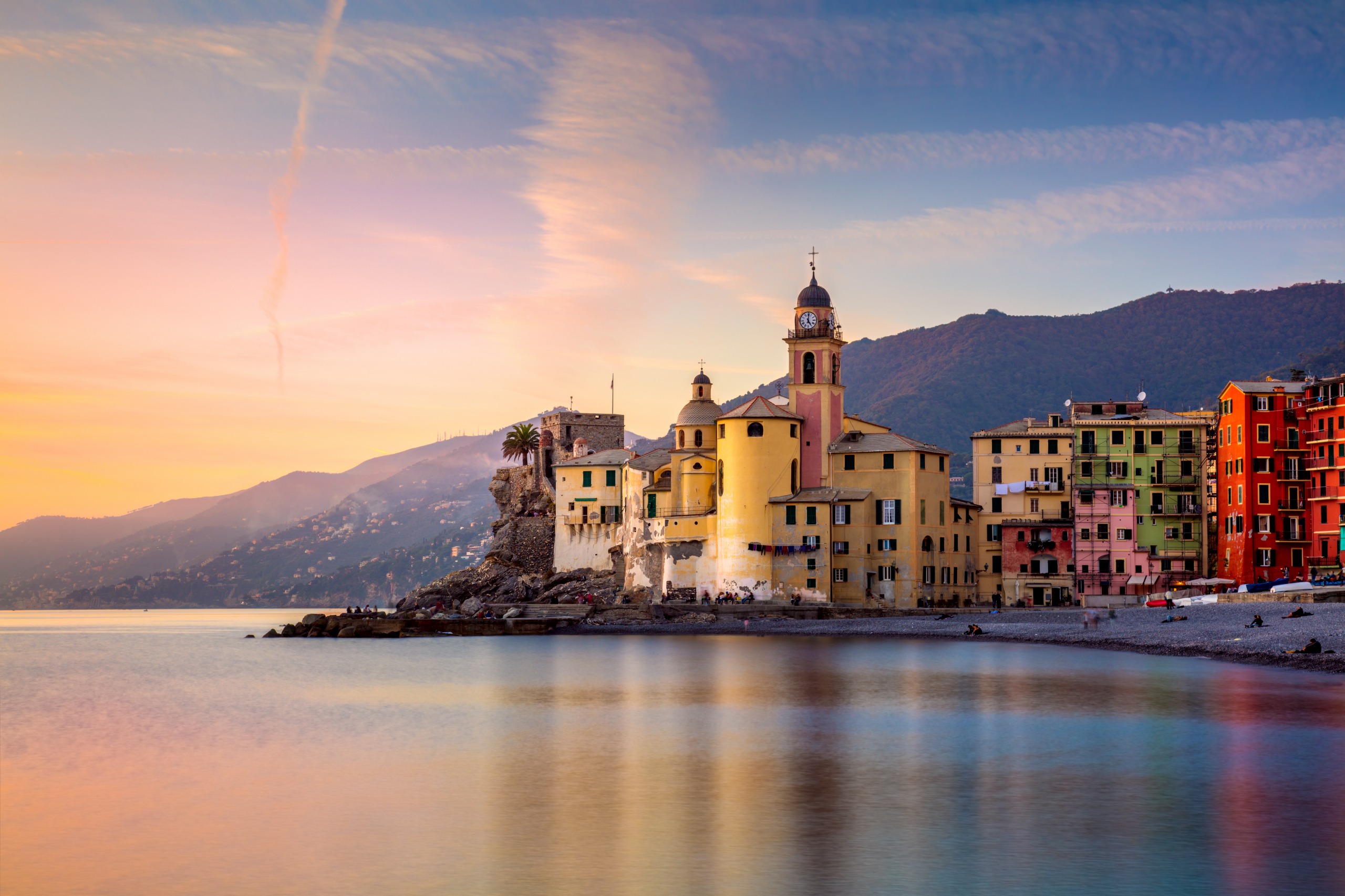
- the San Fruttuoso Abbey, perched on the Ligurian coast;
- the Brown Castle overlooking Portofino;
- the Cappella del Barolo, in the Piedmont wine region;
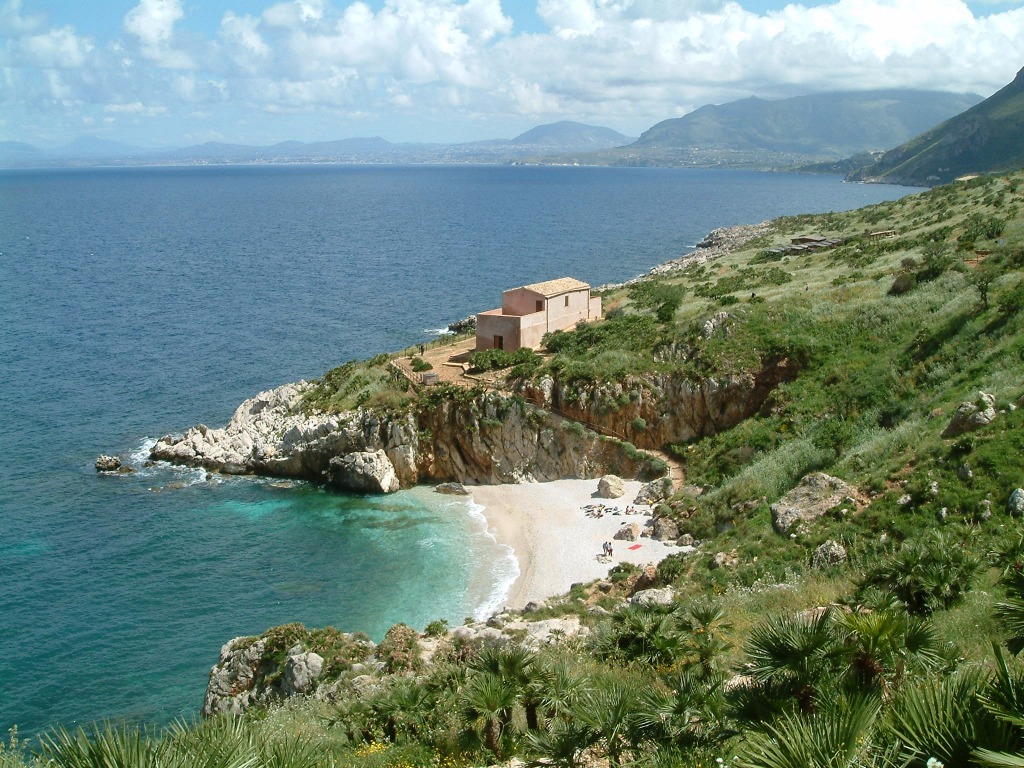
- the Zingaro Nature Reserve, in Sicily.
FAQ
Frequently asked questions
No. The basilica houses only a cenotaph in tribute to the poet. His remains rest in Ravenna, where he died in exile in 1321, and the city has always refused to return them to Florence.
Plan between 1 and 2 hours depending on your interest in painting and architecture. The Pazzi Chapel and cloister alone deserve an additional 20 to 30 minutes.
Giotto, his students Taddeo and Agnolo Gaddi, sculptor Desiderio da Settignano, architect Filippo Brunelleschi for the Pazzi Chapel, and Vincenzo Danti for the Baroncelli Chapel.
Yes, the space is vast and wandering is free. Children generally enjoy the cloister and Pazzi Chapel. Plan for age-appropriate explanations for the funerary section.
Extend Your Journey
Santa Croce is just one gateway to Italy's heritage. To build a tailor-made itinerary combining Florence, Tuscany, and other regions, consult our ideas for journeys through Italy.
Interested in this visit?
We can include it in your personalised itinerary.